
Why queer Schöneberg history was never only gay history

Schöneberg's queer history is often told as a story about men.
That is incomplete. Here is the lesbian side of the Rainbow Quarter — what we know, what we suspect, what we don't.
Why this story often disappears
If you read about queer history, you bump disproportionately into men: Hirschfeld, Isherwood, the Eldorado, Paragraph 175.
There are reasons for that — but it isn't the full picture. Lesbian history has long been under-researched, and Schöneberg in particular has a tradition that hardly shows up in many walking tours.
That gap isn't accidental. Paragraph 175 didn't directly criminalise lesbian women, which paradoxically meant fewer files, fewer police records and fewer formal sources — and therefore less of what conventional historiography is made of.
Schöneberg as a lesbian meeting place
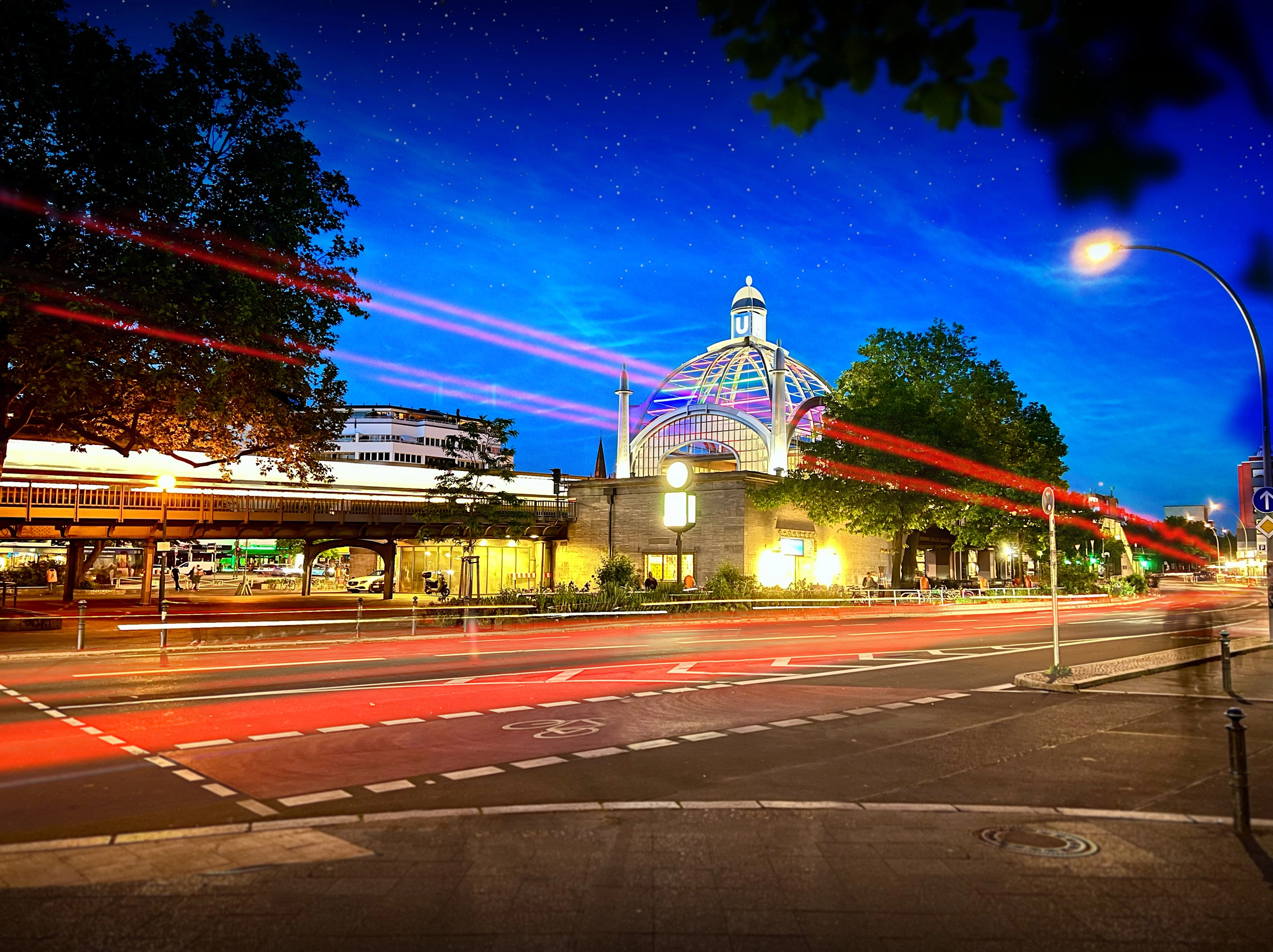
The area around Nollendorfplatz was, during the Weimar Republic, also an important meeting place for the lesbian community.
Read more
There were women's clubs, associations and venues where women could meet without having to hide their relationships. Some addresses were explicitly listed as women's clubs, others were used flexibly depending on weekday, time and event format.
Berlin in that period also had lesbian magazines such as Die Freundin, which published meeting points, political topics and reader letters. Together this added up to a kind of lesbian public sphere that was rare in Europe at the time.
Bars, associations, magazines, networks
What is documented includes venues that hosted dance events for women, associations that combined social and political functions, and publications with a self-aware audience.
These structures weren't promoted to tourists like the Eldorado was, but they were a denser everyday part of the community than today's narrative often suggests.
Caution helps when researching: not every address mentioned in modern guidebooks is identical to what is documented historically. The Schwules Museum and academic publications on lesbian history are reliable starting points.
Visibility and invisibility
Lesbian history has a structural visibility problem. Where gay history often works with images of public bars and persecution files, lesbian history more often happened in apartments, salons, smaller clubs and private networks. That was partly protection, partly necessity, partly a different form of sociability.
For memorial culture this means: it is not enough to list well-known addresses. Lesbian history has to be made visible actively, otherwise it disappears.
Why a modern walking tour has to think about this
A tour that treats queer history as gay men's history alone reproduces the very problem it should challenge.
A good tour names research gaps, foregrounds lesbian addresses where they're documented, and stays cautious where sources are thin.
What visitors can take away
First: queer history is plural. Gay, lesbian, trans, bisexual — these histories are intertwined but not identical.
Second: not finding sources doesn't necessarily mean nothing happened, it can mean nothing was filed. Third: visibility is a political project, not a state of affairs.
Live in the quarter, not just on Google
Our KiezTour deliberately doesn't only follow the loud, well-known stories.
The Nollendorfkiez is exactly the place to see how diverse queer life already was a hundred years ago. Our drag queen guides make that diversity a topic, instead of skipping over it.
Frequently asked questions
Was Schöneberg a lesbian centre too?
Yes. It wasn't exclusively lesbian, but lesbian meeting places and publications were part of the Weimar scene around Nollendorfplatz.
Why do we hear less about lesbian bars?
Paragraph 175 did not directly criminalise lesbian women, which produced fewer official records and less formal visibility — not less actual life.
Are there still lesbian spaces in Schöneberg today?
The scene is less strictly gendered than in the 1920s, but there are explicitly FLINTA*-focused bars, events and initiatives in the area.
Where can I learn more?
The Schwules Museum exhibits lesbian history alongside gay history. Academic publications and books on lesbian Berlin fill in the picture.
Also worth a look on the KiezTour
- Our drag queen guides — stories beyond the clichés
- KiezTour dates
- Queer history of Schöneberg
- Queer Berlin in the 1920s