
How a residential district became Berlin's queer heart
Berlin-Schöneberg has been a historical centre of queer life for over a century — from the Weimar Republic through the Nazi rupture to today's Rainbow Quarter. The full arc, in one read.
Schöneberg was never just a residential district
Walk through Schöneberg today and you see late 19th-century apartment blocks, cafés, kiosks and along the main streets the faded glamour of old West Berlin.
What many overlook: the area has been one of Europe's historically densest queer spaces for over a hundred years. This history can be traced at concrete addresses — and it explains why this district, and not Mitte or Charlottenburg, became the Rainbow Quarter.
The Weimar Republic: freedom, nightlife, subculture
In the 1920s, Berlin was a major site of queer culture, science and the emancipation movement.
Read more
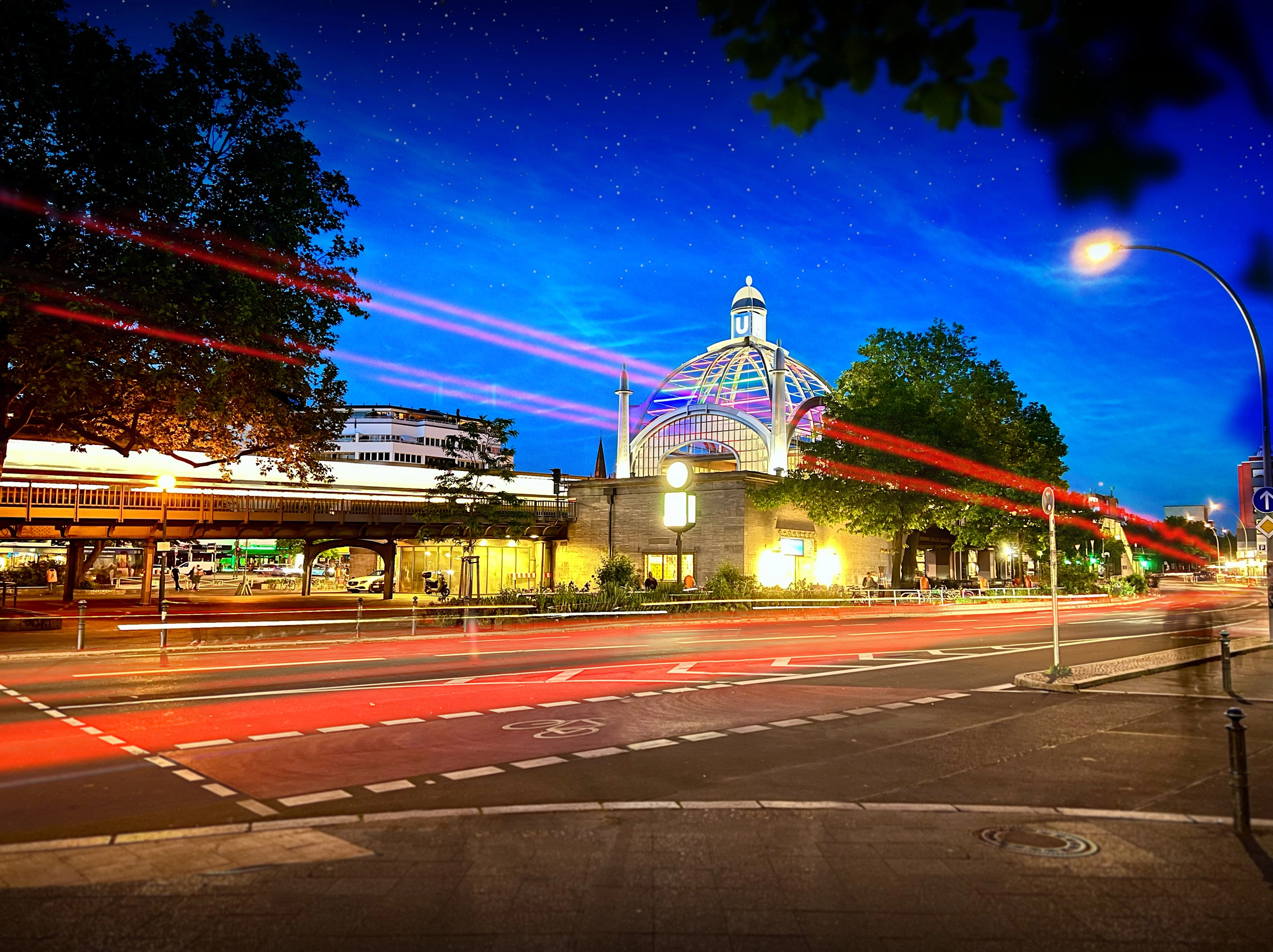
Magnus Hirschfeld founded the Institut für Sexualwissenschaft in Tiergarten in 1919, combining medical advice, research, archive and meeting space — until it was destroyed in 1933. Schöneberg sat right next to it, geographically and socially. Bars, cabarets, associations and publishers clustered around Nollendorfplatz, Wittenbergplatz and parts of Tiergarten.
Weimar's queer scene was not a homogeneous glamour world. It ranged from avant-garde cabarets to middle-class associations to precarious working-class bars. That diversity made it strong — and at the same time vulnerable.
Bars, clubs and meeting spaces
Venues such as the Eldorado became famous well beyond Berlin.
Alongside them, dozens of smaller and less spectacular meeting points existed for gay, lesbian and trans people. These spaces were not only about pleasure; they were social infrastructure — places of safety in a society that only partly tolerated queer life and continued to criminalise it through Paragraph 175.
The rupture under National Socialism
With the Nazi takeover in 1933, Weimar visibility ended abruptly.
Bars were closed, associations dissolved, files seized. Hirschfeld's institute was looted and its library burned. Thousands of homosexual men were arrested under the tightened Paragraph 175, many deported to concentration camps. Lesbian women were less often formally prosecuted, but systematically isolated — they too lost their spaces.
For Schöneberg this was not a pause in queer life. It was the destruction of structures whose rebuilding would take decades.
Post-war and the long road back
After 1945, Paragraph 175 remained in force in West Germany in its tightened Nazi version for many years.
Read more
It was substantially reformed only in 1969 and finally abolished in 1994. The revival of visible queer spaces in Schöneberg started slowly in the late 1960s and gained pace in the 1970s and 80s — driven by activism, new bars, bookshops and publications.
This phase shaped the quarter we know today: bookshops such as Eisenherz, bars around Motzstraße, community structures and eventually official adoption of the term Rainbow Quarter by the district itself.
Today: a Rainbow Quarter as lived memory
What characterises Schöneberg today is the overlap of history, scene and everyday life.
You can step into a bar, see a memorial plaque a few metres from the door, walk three buildings further and stand in a bookshop that has been part of the community for decades — and end the evening in the same block where people danced in 1925. Few European neighbourhoods carry this density.
Live in the quarter, not just on Google
These layers are exactly what makes the KiezTour work: you don't walk through a museum, you walk through streets where queer history is still visible.
Our drag queen guides connect anecdote, fact and present — without pathos, but with attitude.
Frequently asked questions
Why Schöneberg in particular?
The area was geographically central, had affordable apartments, a mixed middle- and lower-middle-class population and good transport.
That allowed bars, associations and meeting points to concentrate, rather than spread across the city.
Was there queer life in Schöneberg before the 1920s?
Yes, but less visibly. Visibility expanded only with the Weimar Republic's relative liberalisation and the emerging emancipation movement.
What of the Weimar scene survived?
Architecturally, a lot — many addresses still exist, often with different uses. Substantively, very little: archives, collections and associations were systematically destroyed after 1933. Today's scene is a post-war reconstruction, not a continuous heritage.
Where can I learn more?
The Schwules Museum in Schöneberg collects and exhibits queer history. A guided tour complements the museum because it shows the places themselves.
Also worth a look on the KiezTour
- KiezTour dates — Thursdays through the Rainbow Quarter
- Locations with history
- Queer Berlin in the 1920s
- Magnus Hirschfeld in Berlin