
Why the Weimar scene still fascinates
1920s Berlin is legendary as a queer high point. But there's a difference between cabaret myth and historical reality — and it matters for anyone who wants to understand the Rainbow Quarter today.
The fascination of the Golden Twenties
Cabaret, Marlene Dietrich, glamour, nightlife, the Eldorado — anyone hearing "1920s Berlin" has images instantly.
They aren't wrong, but they're incomplete. They tend to skip over how politically and economically unstable the Weimar Republic was, the fact that Paragraph 175 kept criminal prosecution possible, and that this dazzling visibility was carried by a much smaller share of the population than the myth suggests.
And yet the basic feeling holds: in few other places and periods was queer life as openly negotiable in Europe as in 1920s Berlin.
Berlin as a centre of queer visibility
Before the Nazi era, Berlin had a vivid queer culture and an early emancipation movement.
Magnus Hirschfeld founded the Institut für Sexualwissenschaft in 1919, several associations worked on reforming Paragraph 175, magazines like Die Freundin and Der Eigene reached an actual audience, and the scene had bars, cabarets, balls and public events at a density unmatched in other European cities.
Schöneberg and Nollendorfplatz
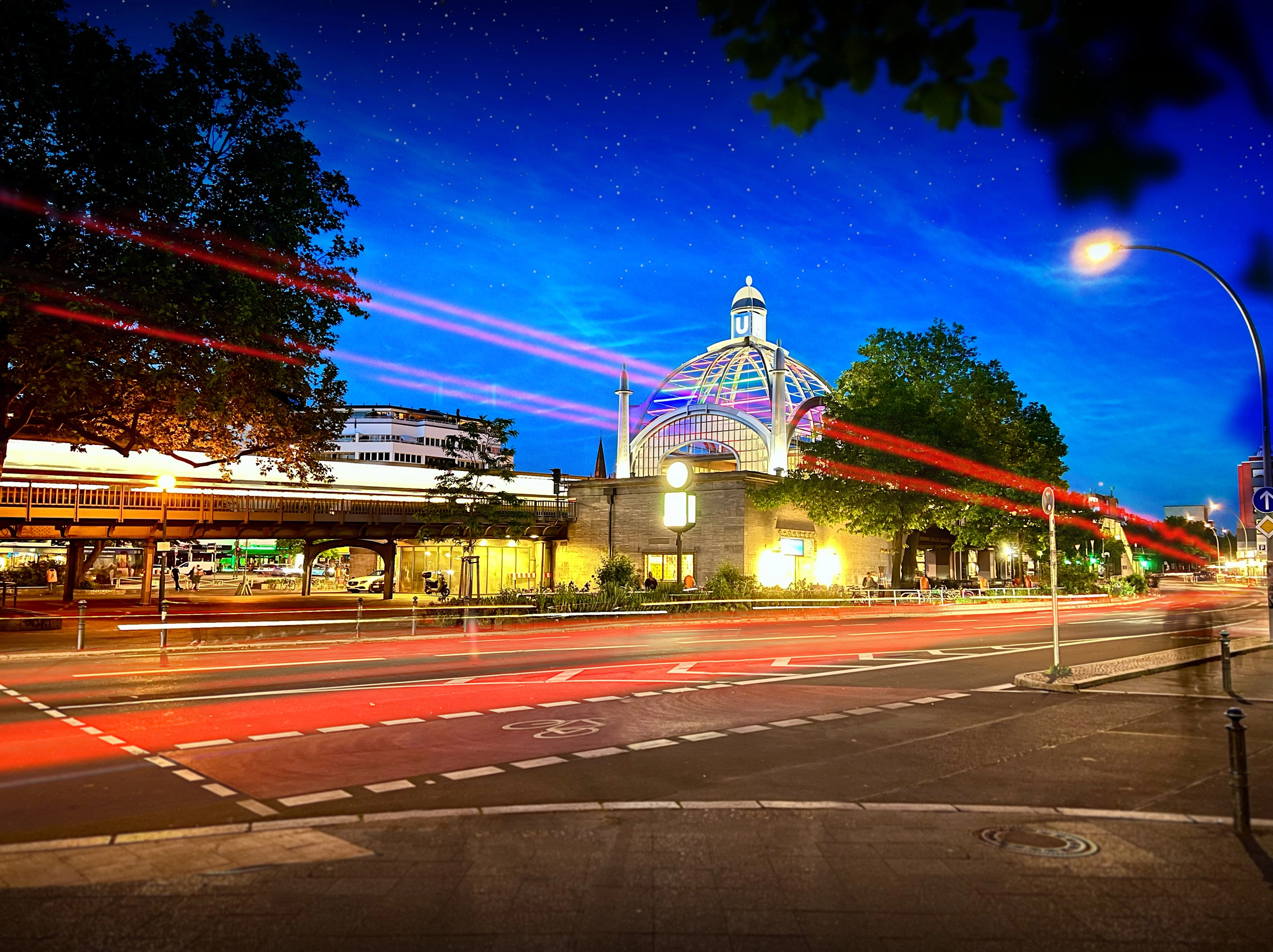
Geographically, much of this concentrated in Schöneberg. Bars around Motzstraße and Nollendorfplatz, cabarets such as the Eldorado, plus venues at Wittenbergplatz and in Tiergarten.
Anyone who visited Hirschfeld's institute and wanted to go out afterwards could be inside one of the densest queer infrastructures in the city within minutes. That spatial proximity has shaped the quarter to this day.
Who was visible — and who wasn't
The dazzling scene didn't reach everyone equally. Visible were mostly middle- and upper-class people with money, networks and a willingness to take risks.
Lesbian women were less prosecuted but had fewer formal venues and a different kind of public sphere. Trans people — at the time categorised as transvestites — had visible spaces in some venues but barely any political representation. Working-class queers, precarious lesbians and gays, queer migrants generally lived realities very different from the images that ended up in tourist guides.
These distinctions are not academic. They change how we read the 1920s myth today.
The abrupt rupture from 1933
In 1933, Weimar visibility ended within weeks. Bars were closed, associations dissolved, files seized, Hirschfeld's institute destroyed.
Nazi persecution hit homosexual men hardest: over 50,000 convictions under the tightened Paragraph 175, several thousand deportations to concentration camps. Lesbian women were less often formally prosecuted but systematically isolated. This history is non-optional for any narrative of the 1920s — without it, the myth becomes a backdrop without shadows.
Why this history still matters today
Visibility needs places, protection and political backing. The 1920s show what was possible.
The 1930s show how fast it could disappear. Both together are the actual lesson — not one without the other.
Live in the quarter, not just on Google
On the KiezTour we connect both sides: the dazzling 1920s scene and the question of why it could be destroyed so quickly.
Our drag queen guides stand in front of addresses where this history materialises.
Frequently asked questions
What made Berlin so unusual?
A mix of relative Weimar-era liberalisation, an active emancipation movement, dense urban structures and a cultural openness that no other European city combined to the same degree at the same time.
Was homosexuality legal in 1920s Germany?
No. Paragraph 175 continued to criminalise sexual acts between men. Reform movements existed, but legalisation did not happen.
What happened to the bars and associations after 1933?
They were closed, dissolved or repurposed. Structures grown over decades were destroyed in weeks.
How can I experience this history today?
At the Schwules Museum, in academic publications, at memorial sites such as the plaque at Nollendorfplatz, and on walking tours that include historical addresses.