
Why this square matters for queer Berlin
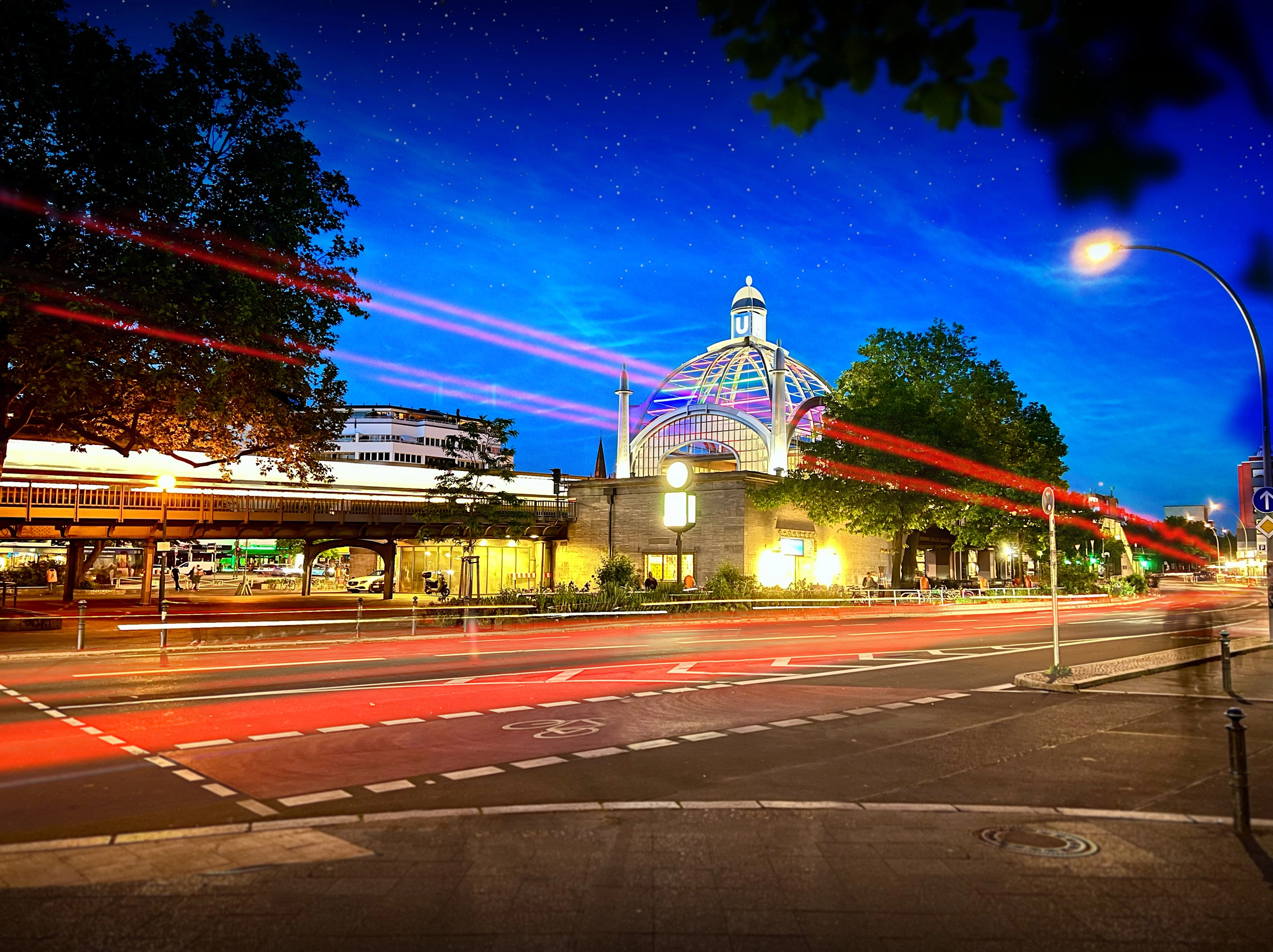
Nollendorfplatz is more than a U-Bahn station: it is considered the centre of Berlin's Rainbow Quarter — a place where queer visibility, the history of persecution and present-day nightlife meet within a few metres.
One square, many stories
At first glance Nollendorfplatz looks like an ordinary Berlin transport hub: an elevated U-Bahn station, bus stops, a market on Wednesdays and Saturdays, late 19th-century facades.
Stand still for a few minutes and the layers start to show — rainbow flags above doorways, a memorial plaque at the station, bars whose entrances carry unmistakable queer codes.
This layering is exactly what makes the square central for many queer Berliners, visitors and historians. It works as meeting point, memorial and signpost — often within a few steps of each other.
Nollendorfplatz as the centre of the Rainbow Quarter
The Tempelhof-Schöneberg district explicitly describes Nollendorfplatz as the centre of the Rainbow Quarter.
Around it lie the streets that historically form the heart of Berlin's gay scene: Motzstraße, Fuggerstraße, Eisenacher Straße and Nollendorfstraße.
This concentration is no coincidence. Already during the Weimar Republic, Schöneberg was one of the most important queer hubs in Europe — and Nollendorfplatz sat right in the middle. The fact that the district administration today routinely uses the term Rainbow Quarter is in part recognition of decades of grown visibility.
Queer life around the square
Today, around Nollendorfplatz you find a dense mix of bars, cafés, bookshops, fetish stores, restaurants and community institutions.
Some addresses have been part of the local memory for decades; others come and go with the rhythm of the scene.
What stands out is how undemonstrative this visibility is. No one at Nollendorfplatz needs to convince anyone that queer life belongs here. That is exactly what many visitors notice immediately — and what makes the square such an unusually relaxed place.
The darker side of the history
A memorial plaque has hung at the U-Bahn station since 1989.
Read more
With the pink triangle, it commemorates the persecution and murder of homosexual people during the Nazi regime. The pink triangle was the marker sewn onto the uniforms of homosexual prisoners in the camp system — a mark of disenfranchisement that the queer movement later reclaimed as a symbol of remembrance.
The plaque is small, easy to miss, and important precisely for that reason: it anchors a piece of history in the everyday space through which thousands of people pass each day. Stop for a moment, and the Rainbow Quarter looks different afterwards.
Why the place still matters today
Nollendorfplatz functions simultaneously as a safe space, a meeting point and a public landmark.
Read more
For many queer people from rural areas, more conservative regions or abroad, it is the first place in Berlin where they can move without explaining themselves. For the city, it is an internationally known address — and therefore also a tourism factor.
This double role brings benefits and friction. It keeps the quarter visible and politically audible. It also turns bars into selfie backdrops if visitors forget that these are spaces with their own audiences.
What visitors often overlook
If you only cross the square, you mostly see the obvious markers: rainbow flags, bars, the occasional walking tour.
It gets more interesting when you look closer — at doorways, small signs, notices in community spaces, the memorial at the station, mosaic details on some facades.
The square does not tell its story loudly. It expects you to take your time.
Live in the quarter, not just on Google
At Nollendorfplatz, history doesn't stay abstract. On our KiezTour we stand exactly where queer visibility, persecution and present-day nightlife meet within a few metres. Our drag queen guides tell these stories on location — sharp, charming and free of guidebook clichés.
Frequently asked questions about Nollendorfplatz
Why is Nollendorfplatz considered a queer place?
The square sits at the heart of historically queer Schöneberg.
Already during the Weimar Republic, the area was a centre of Berlin's gay scene — a tradition that continues today in bars, associations, bookshops and memorial sites.
What is the memorial plaque at the U-Bahn station?
Installed in 1989, the plaque uses the pink triangle to commemorate homosexual victims of the Nazi regime. It is one of the first memorials of its kind in Berlin's public space.
Which U-Bahn lines stop at Nollendorfplatz?
U1, U2, U3 and U4. This four-line constellation is unusual for a single Berlin neighbourhood and one reason such a dense scene could develop here in particular.
Can I visit the square without any prior knowledge?
Of course — but you'll see far more if you understand the context. A guided tour or a few background articles turn this transport hub into a walkable history book.
Also worth a look on the KiezTour
- Upcoming KiezTour dates — Thursdays through the Nollendorfkiez
- Locations around Nollendorfplatz
- What makes the Rainbow Quarter unique