

Where the Rainbow Quarter carries its history
Schöneberg has no single central memorial, but many small points of remembrance — plaques, Stolpersteine, addresses where history thickens. Here's an orientation.
Why queer history needs memorial sites
Queer history was actively made invisible for long periods — by criminal law, by destroyed records, by social silence.
Memorial sites are a correction. They say: something happened here, people were here, life happened, persecution happened, life continued. In Schöneberg these sites are spread across the quarter — none of them monumental on its own, but dense together.
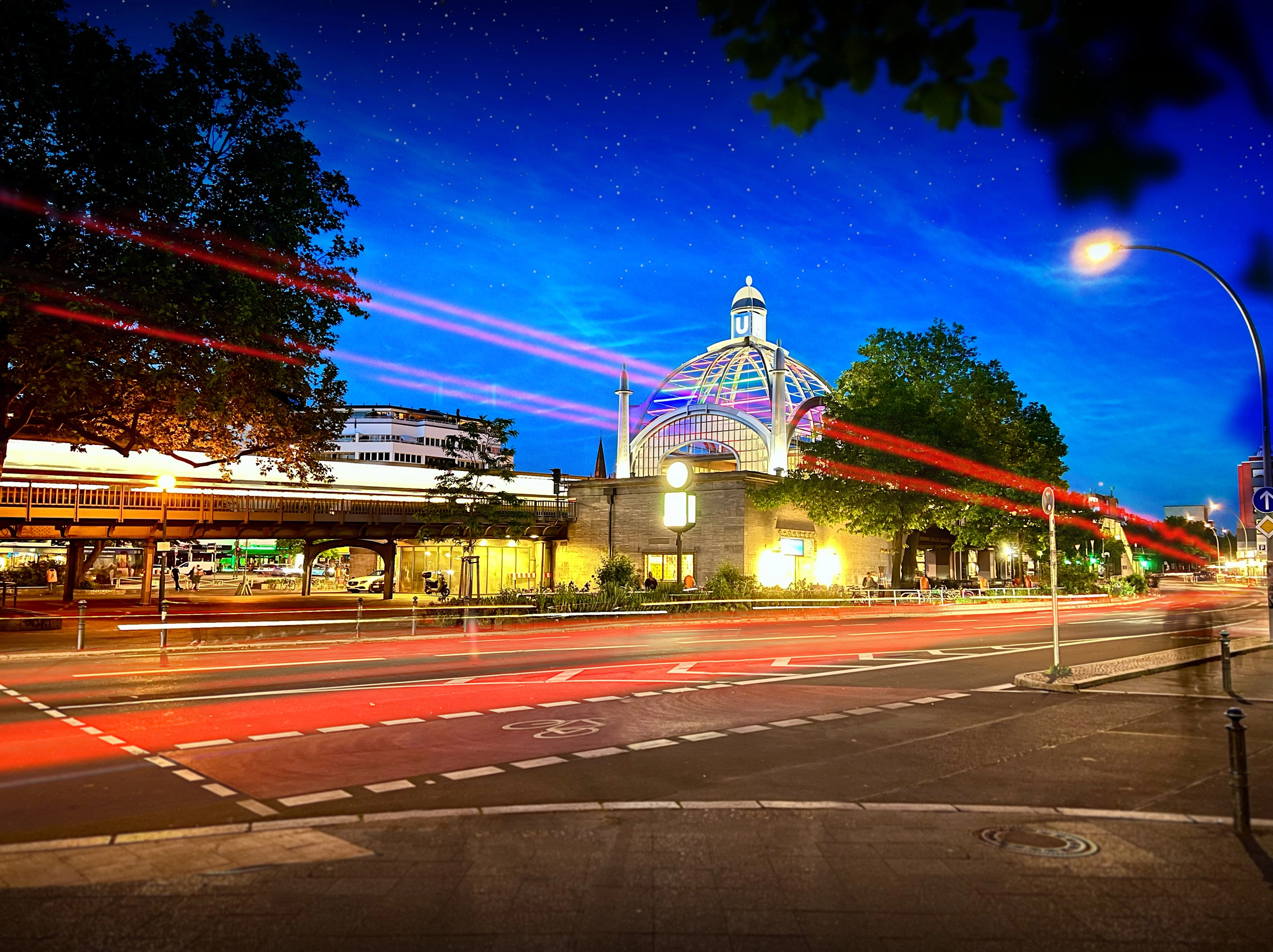
The plaque at Nollendorfplatz
Since 1989, a plaque with a pink triangle at Nollendorfplatz U-Bahn station has commemorated the persecution and murder of homosexual people during the Nazi regime.
It is small, visible in passing, and deliberately not isolated from everyday space. That integration into the quarter is its particular form of memory.
Stolpersteine and house memorials
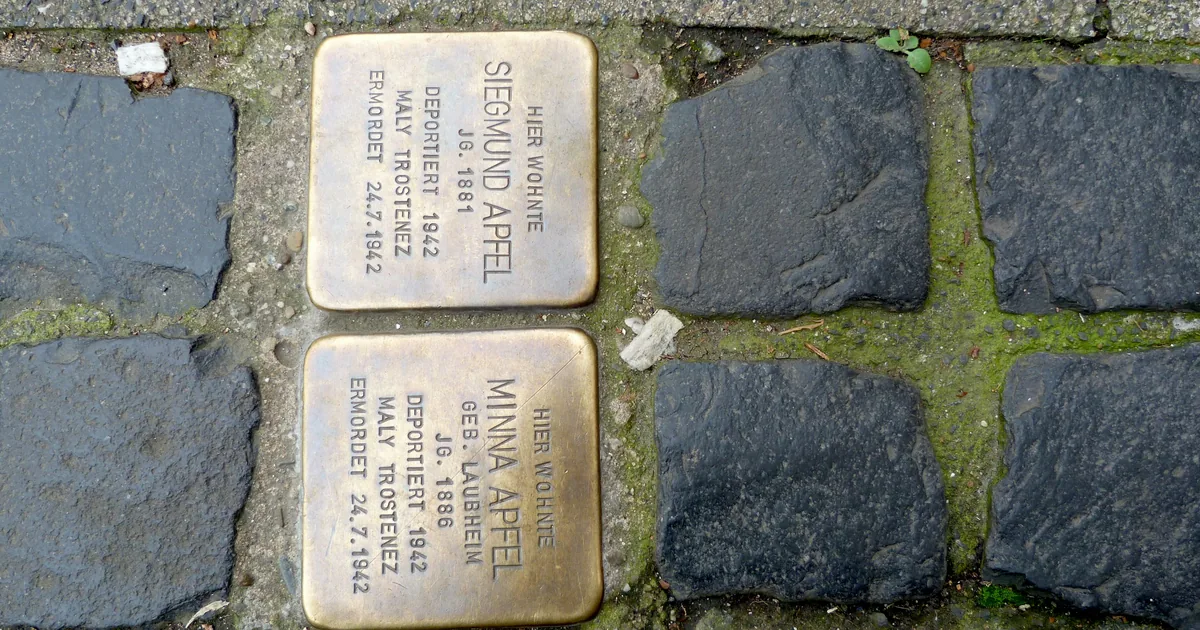
At various addresses around Nollendorfplatz, Motzstraße and Fuggerstraße, you'll find Stolpersteine — small brass plates in the pavement that commemorate residents deported or murdered under the Nazi regime. Several of these mark queer victims; they are part of the larger Berlin-wide Stolperstein project. Walk the quarter slowly with your eyes occasionally on the ground and you'll spot them.
The Christopher Isherwood plaque
At Nollendorfstraße 17, a plaque commemorates Christopher Isherwood, who lived there between 1929 and 1933.
The marker connects literary history with queer history and shows how tightly interwoven these threads are in Schöneberg.
The quarter as a living memorial space
Memory in Schöneberg isn't limited to plaques. Bars, bookshops like Eisenherz, associations, shop windows and former locations carry stories that aren't all institutionally anchored.
This oral, everyday memory complements the official sites and is often the most striking part for tour participants: history doesn't only live on plaques, it lives in the people who tell it.
Connection to other Berlin memorials
Outside Schöneberg, the central Memorial to Homosexuals Persecuted under Nazism in Tiergarten was inaugurated in 2008.
It complements the neighbourhood plaques with a state-funded memorial and lies only a few U-Bahn stops away. If you plan a day, you can connect both layers — neighbourhood remembrance here, central memorial there.
How to visit these sites
Respectfully, informed, without making them events. A guided tour is a good format because it can order the sites and surface cross-connections that solo walks easily miss.
If you go alone, do a little reading first — the most important sites are documented, even when they aren't advertised.
Live in the quarter, not just on Google
Many people walk past queer memorial sites without noticing them.
On the KiezTour we show you where the quarter wears its history openly — and where you have to look more closely. Our drag queen guides connect official sites with community anecdotes.
Frequently asked questions
How many queer memorial sites are in the quarter?
There are several — plaques, Stolpersteine, addresses with context.
There's no single official list, but the Schwules Museum and academic work document many.
Are the sites all freely accessible?
Yes. They are in public space — pavements, facades, station walls.
Why isn't there a single central Schöneberg memorial?
The quarter's memorial landscape is intentionally decentralised. It follows the logic of a grown neighbourhood, not of a finished memorial project. Both approaches have their place.
How does this complement the Tiergarten memorial?
Schöneberg is everyday neighbourhood remembrance; Tiergarten is central state memory. Together they form a fuller memorial space.