

Why his legacy still matters
Magnus Hirschfeld made Berlin a city of queer science and emancipation — and paid for it with exile and the destruction of his institute. His story is part of Berlin's DNA.
Who was Magnus Hirschfeld?
Magnus Hirschfeld (1868–1935) was a doctor, sexologist and activist.
He is one of the most influential figures in the early queer emancipation movement — not only in Germany, but internationally. Hirschfeld combined medical practice, research and political work in ways that were unusual for his time and gave his influence reach well into the 20th century.
The Institut für Sexualwissenschaft
In 1919, Hirschfeld founded the Institut für Sexualwissenschaft in Berlin-Tiergarten.
Read more
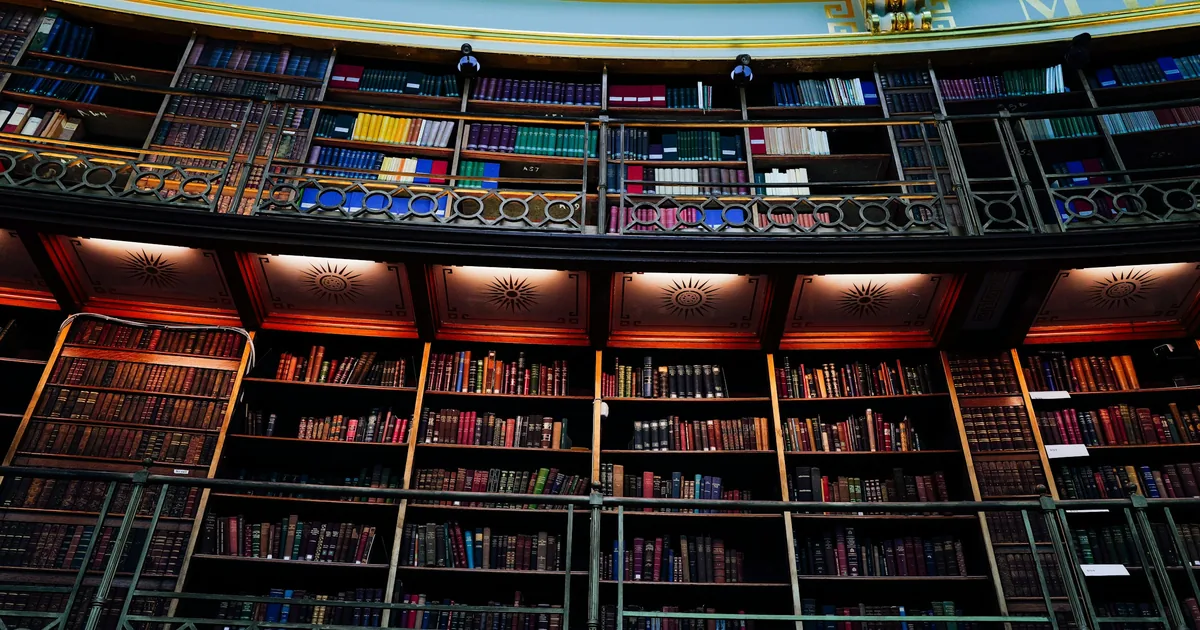
It was a hybrid: research institute, counselling centre, medical practice, library, museum and meeting space. It offered marriage and sexual counselling, treatments, lectures and events — and became an international address for researchers, patients and activists.
The institute existed until 1933, when it was looted by Nazis and a large part of its library was destroyed in the book burning at Opernplatz. Hirschfeld himself was on a lecture tour abroad at the time, did not return to Germany, and died in exile in Nice in 1935.
Why this was revolutionary
Before Hirschfeld, homosexuality in Germany was treated almost exclusively as a disease or a crime.
Read more
Hirschfeld pursued a different approach: an empirical understanding of sexual and gender diversity instead of pathologisation. He introduced the concept of sexual intermediaries, collected data, advised patients and actively pushed for the abolition of Paragraph 175.
This combination of research, practice and activism is taken for granted today — but it wasn't then. Hirschfeld turned queer life into a legitimate object of scientific work, and thus into something politically negotiable.
What this has to do with Schöneberg
The institute was in Tiergarten, not directly at Nollendorfplatz.
But the scene around Hirschfeld was part of the same Berlin movement that made Schöneberg a queer centre. Anyone who attended a Hirschfeld lecture and wanted to go out afterwards was within a few U-Bahn stops of the bars and cabarets in Motzstraße. This spatial entanglement is why Hirschfeld's influence is traceable into the quarter.
What is often misunderstood
Hirschfeld was not only a scientist. He was a politically visible figure who took positions in lectures, writings, in court and within associations.
His influence reached far beyond research — he was a lobbyist, an adviser, a public figure. Reading him only as a distant academic misses the actual point.
Why his memory still matters
Hirschfeld shows that the connection between science, practice and activism was — and is — central to queer emancipation.
A queer history that omits him leaves out a substantial part of its roots. In Berlin, the Magnus-Hirschfeld-Ufer near the former institute site is among the places that keep his memory present.
Live in the quarter, not just on Google
Even though Hirschfeld's institute didn't sit at Nollendorfplatz, his story is part of the larger queer Berlin we make tangible on the KiezTour.
For more background, our guides are the right people to ask.
Frequently asked questions
Where was the Institut für Sexualwissenschaft?
In Berlin-Tiergarten, near today's Magnus-Hirschfeld-Ufer. The original building no longer exists.
What happened to the institute in 1933?
It was looted by Nazis. A large part of its library ended up in the book burning at Opernplatz in May 1933.
Why did Hirschfeld die in exile?
He was on a lecture tour abroad when the Nazis took power and never returned. He died in Nice in 1935.
Where can I learn more today?
The Magnus-Hirschfeld-Stiftung in Berlin, the Schwules Museum and academic publications. Guided tours in Schöneberg often touch on his influence as well.