

Blog
What queer travellers should know
Safety isn't a side topic for many queer travellers. The Nollendorfkiez is considered a visible queer space — what that means in practice, where caution still helps and where you can find support.
Schöneberg, Kreuzberg, Neukölln, Mitte — where they differ
Berlin doesn't have one queer neighbourhood, it has several. Each with its own profile. Here is what sets Schöneberg apart from Kreuzberg, Neukölln and Mitte — and why it still plays a special role.
Where the Rainbow Quarter carries its history
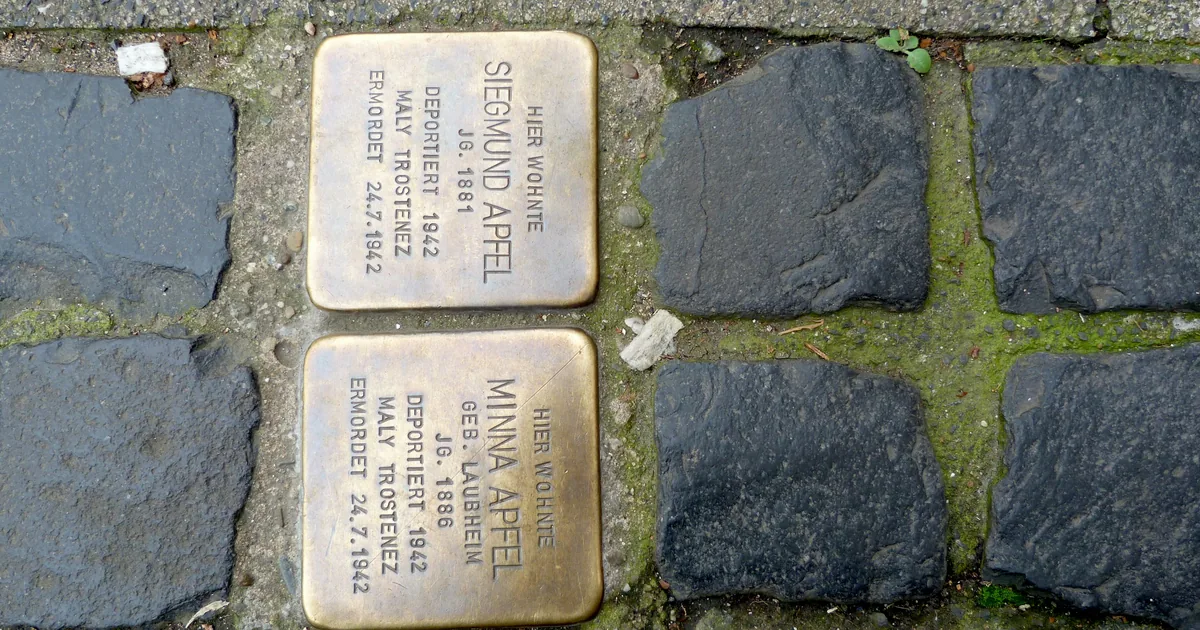
Schöneberg has no single central memorial, but many small points of remembrance — plaques, Stolpersteine, addresses where history thickens. Here's an orientation.
Why queer history needs memorial sites
Queer history was actively made invisible for long periods — by criminal law, by destroyed records, by social silence. Memorial sites are a correction. They say: something happened here, people were here, life happened, persecution happened, life continued. In Schöneberg these sites are spread across the quarter — none of them monumental on its own, but dense together.
The plaque at Nollendorfplatz
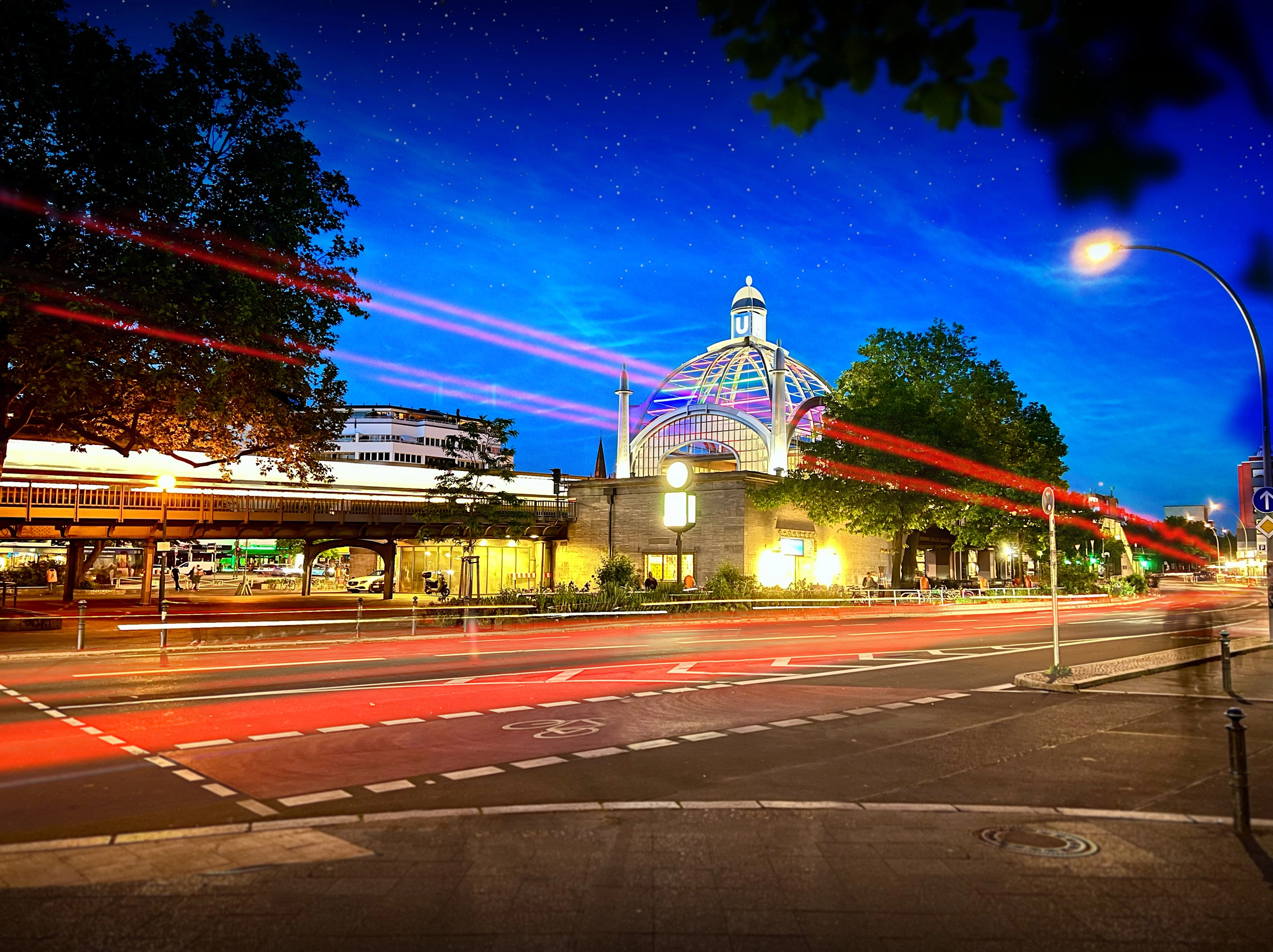
Since 1989, a plaque with a pink triangle at Nollendorfplatz U-Bahn station has commemorated the persecution and murder of homosexual people during the Nazi regime. It is small, visible in passing, and deliberately not isolated from everyday space. That integration into the quarter is its particular form of memory.
Stolpersteine and house memorials
At various addresses around Nollendorfplatz, Motzstraße and Fuggerstraße, you'll find Stolpersteine — small brass plates in the pavement that commemorate residents deported or murdered under the Nazi regime. Several of these mark queer victims; they are part of the larger Berlin-wide Stolperstein project. Walk the quarter slowly with your eyes occasionally on the ground and you'll spot them.
The Christopher Isherwood plaque
At Nollendorfstraße 17, a plaque commemorates Christopher Isherwood, who lived there between 1929 and 1933. The marker connects literary history with queer history and shows how tightly interwoven these threads are in Schöneberg.
The quarter as a living memorial space
Memory in Schöneberg isn't limited to plaques. Bars, bookshops like Eisenherz, associations, shop windows and former locations carry stories that aren't all institutionally anchored. This oral, everyday memory complements the official sites and is often the most striking part for tour participants: history doesn't only live on plaques, it lives in the people who tell it.
Connection to other Berlin memorials
Outside Schöneberg, the central Memorial to Homosexuals Persecuted under Nazism in Tiergarten was inaugurated in 2008. It complements the neighbourhood plaques with a state-funded memorial and lies only a few U-Bahn stops away. If you plan a day, you can connect both layers — neighbourhood remembrance here, central memorial there.
How to visit these sites
Respectfully, informed, without making them events. A guided tour is a good format because it can order the sites and surface cross-connections that solo walks easily miss. If you go alone, do a little reading first — the most important sites are documented, even when they aren't advertised.
Live in the quarter, not just on Google
Many people walk past queer memorial sites without noticing them. On the KiezTour we show you where the quarter wears its history openly — and where you have to look more closely. Our drag queen guides connect official sites with community anecdotes.
Frequently asked questions
How many queer memorial sites are in the quarter?
There are several — plaques, Stolpersteine, addresses with context. There's no single official list, but the Schwules Museum and academic work document many.
Are the sites all freely accessible?
Yes. They are in public space — pavements, facades, station walls.
Why isn't there a single central Schöneberg memorial?
The quarter's memorial landscape is intentionally decentralised. It follows the logic of a grown neighbourhood, not of a finished memorial project. Both approaches have their place.
How does this complement the Tiergarten memorial?
Schöneberg is everyday neighbourhood remembrance; Tiergarten is central state memory. Together they form a fuller memorial space.
Also worth a look on the KiezTour
How a British writer turned Berlin into world literature

Christopher Isherwood lived in Schöneberg between 1929 and 1933 — and made late Weimar Berlin famous worldwide. His stories later became Cabaret. What is myth, what is city history.
Why visitors look for Isherwood
Anyone asking about queer literature, cabaret or the Weimar period in Berlin reliably ends up with Christopher Isherwood. The British writer lived in Berlin between 1929 and 1933 and wrote his Berlin Stories — Goodbye to Berlin, Mr Norris Changes Trains — later adapted into the play I Am a Camera and finally into the musical and film Cabaret.
These texts made late Weimar Berlin internationally famous. Anyone arriving in Schöneberg today with the cabaret myth in mind walks straight into Isherwood's literary legacy.
Isherwood and 1930s Berlin
Isherwood lived among other addresses at Nollendorfstraße 17, where a memorial plaque marks the site today. He moved in a mixed scene of literary circles, queer life, boarding-house residency and everyday Schöneberg. His texts are not pure reportage, but they aren't pure fiction either: they process real places and real people — disguised, sharpened, literaturised.
This is why tour operators and Berlin guides regularly link Isherwood to Schöneberg and the queer scene. That's not invention, but it pays to stay careful: not every scene popularised by film has a single, identifiable real address.
Cabaret: myth and history
Cabaret as musical and film draws on Isherwood's texts but is its own work, with its own pathos and visual language. Sally Bowles is a literary figure who is partly based on people Isherwood actually knew. The dazzling images of Berlin nightlife aren't fabricated — but they sharpen what was historically broader and more everyday.
That's not a critique, it's a reading guide. If you use Cabaret as an entry door into Berlin, open the second door too — the one into the actual city history.
Schöneberg as a stage for international projections
Isherwood was one of many international visitors who chose Berlin in this period as a place of longing or study. Economy, cultural openness, queer visibility, low rents — together this made the city a screen onto which different people projected very different things. Some came for the art, some for the bars, some for sexology, some as pure tourists. Schöneberg was central for many of these groups.
Why Isherwood still matters for queer Berlin
Isherwood's literary work made queer Berlin internationally visible at a time when that visibility was not yet politically self-evident. His books and their adaptations still shape how many people first encounter Berlin. That makes him a gateway, not the whole story — and exactly in that function he remains important.
Live in the quarter, not just on Google
If the names Isherwood or Cabaret immediately spark images in your head: on the KiezTour the myth gets street names, facades and real places. Our drag queen guides know the gap between novel and reality — and fill it with stories that don't dismiss the Cabaret myth, but complete it.
Frequently asked questions
Where did Isherwood live in Berlin?
Among other addresses, at Nollendorfstraße 17 in Schöneberg. The site is marked with a memorial plaque today.
Are Isherwood's Berlin Stories autobiographical?
Partly. They process real places and people, but with literary sharpening. They read best as literary distillation, not as reportage.
What's the connection to Cabaret?
Cabaret as theatre and later film is based on Isherwood's Goodbye to Berlin and emerged through several adaptations — independent in form, but rooted in Isherwood's material.
Is an Isherwood-themed walk worth it?
Yes, especially as an entry point. On a Schöneberg tour Isherwood comes up automatically because his apartment was in the middle of the quarter.
Also worth a look on the KiezTour
Why this place is more than a grey block in Tiergarten
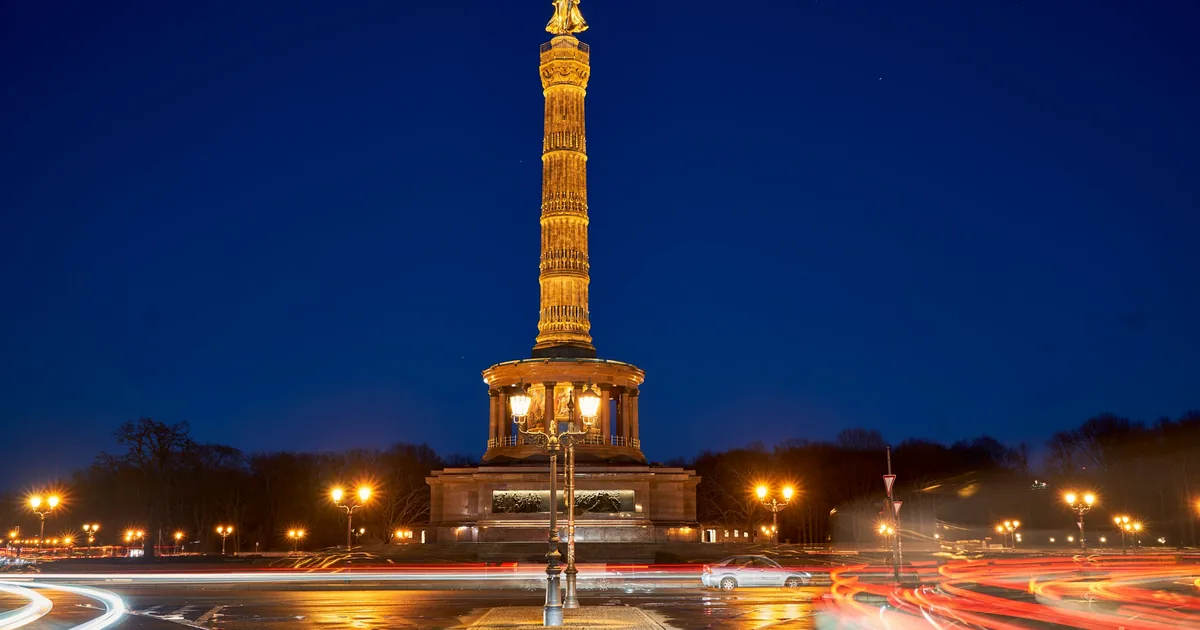
In Tiergarten, diagonally opposite the Holocaust Memorial, stands the Memorial to Homosexuals Persecuted under Nazism. It tells a long-overdue story — and is on the must-see list of any queer Berlin visit.