
Blog
More than leather, shops and clichés
Fetish shops, leather bars, Folsom Europe — they are not a curiosity in the Rainbow Quarter. They are part of a queer subculture with its own history. Here is why this visibility matters.
Folsom Europe 2025: the Rainbow Quarter celebrates diversity
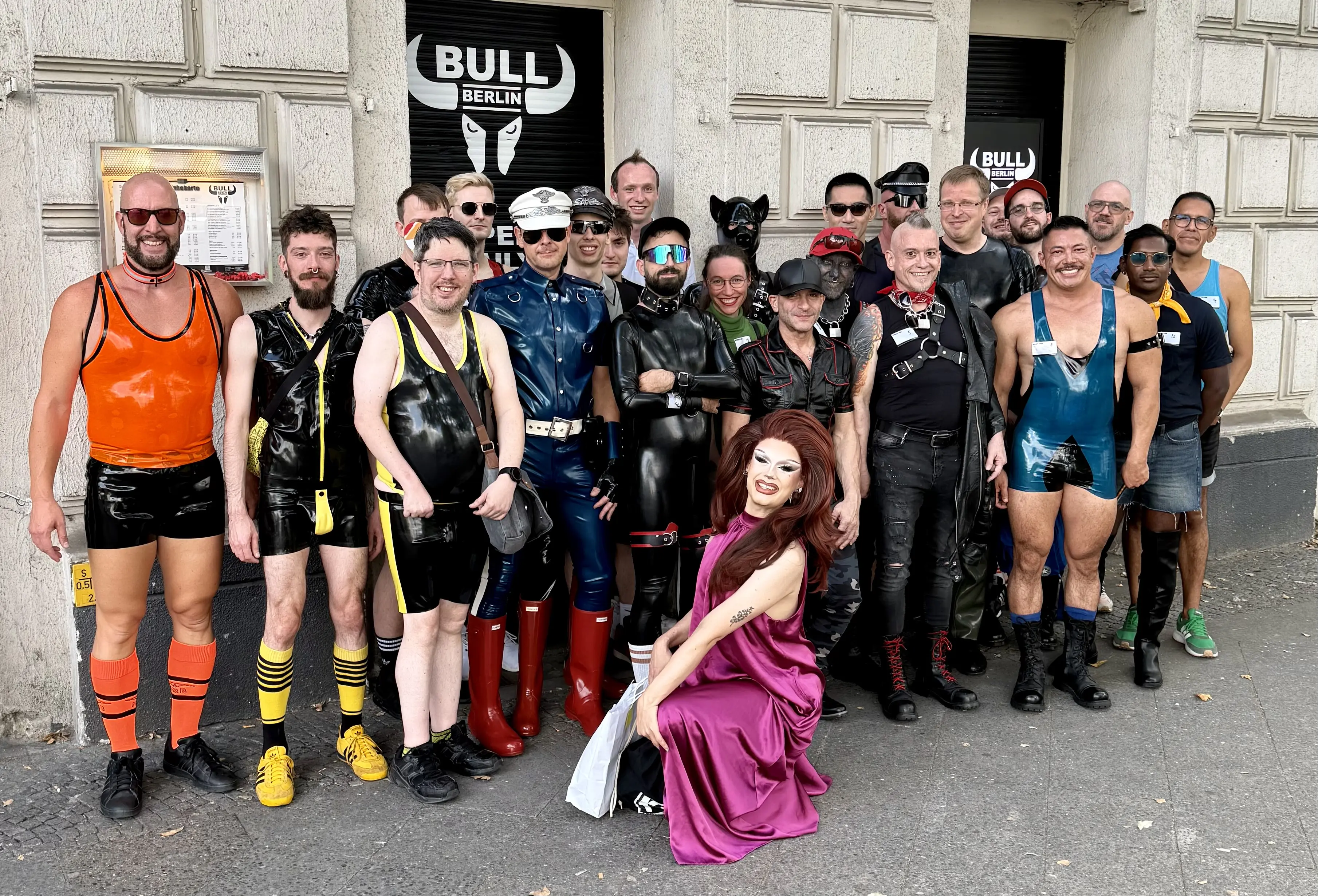
Every September, the Rainbow Quarter around Nollendorfplatz turns into an international hub for the fetish community: Folsom Europe. What started in San Francisco has long become a fixed Berlin tradition — a celebration of diversity, visibility and the freedom to express yourself the way you want.
100 KiezTours — celebrating a milestone in Berlin's Rainbow Quarter
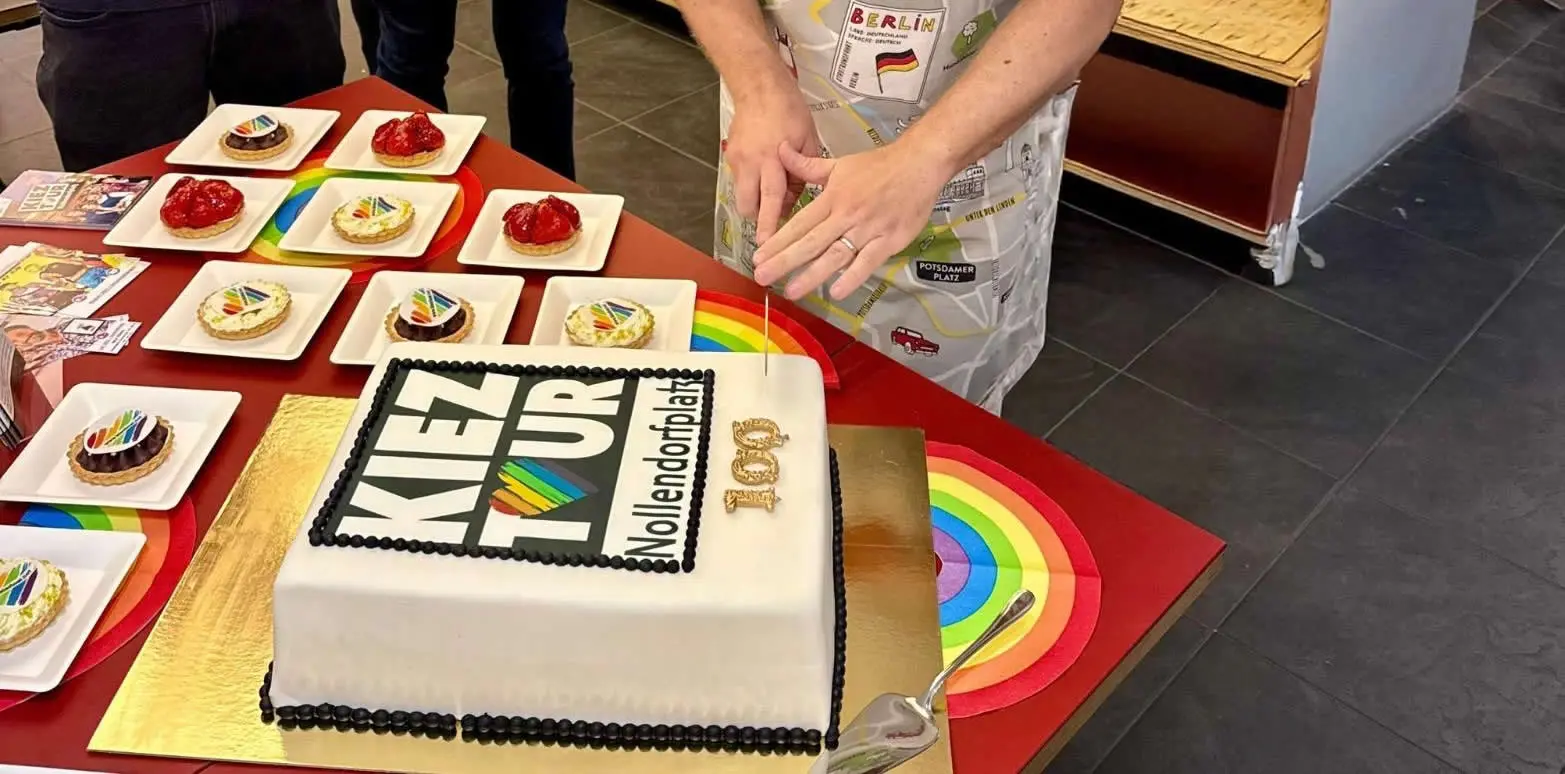
On 10 July 2025 we celebrated our 100th KiezTour — a milestone that started as a small idea and has become a fixed part of queer life around Nollendorfplatz. Over 140 years of history, countless stories from the quarter and a fair amount of glitter have travelled through the Rainbow Quarter with our guests since then.
Why it pairs perfectly with the KiezTour
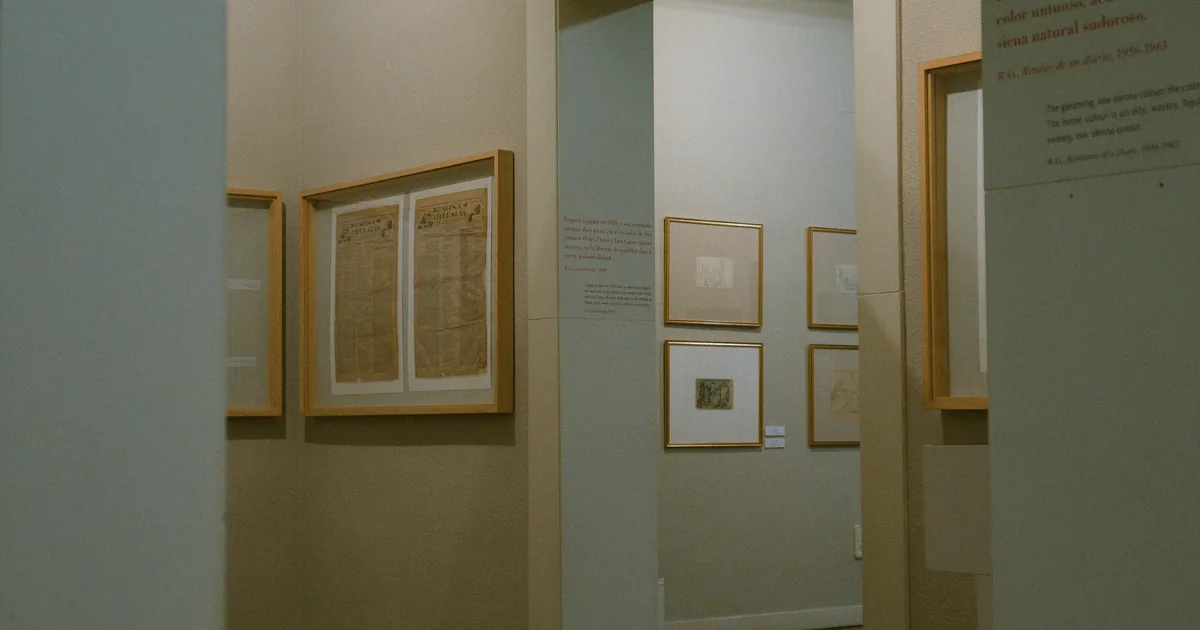
The Schwules Museum on Lützowstraße collects, researches and exhibits queer history at a level that sets international standards — and sits in walking distance from the Rainbow Quarter.
More than a museum of gay history
The name Schwules Museum dates from the 1980s — today the institution covers far more than the original name suggests. It exhibits gay, lesbian, trans, bisexual, intersex and queer life stories, collects archival material, conducts research and curates rotating exhibitions. Anyone arriving with the expectation of a men-only history will be pleasantly surprised.
The museum is among the oldest queer museums in the world and has changed substantially since its founding in 1985. Today it is one of the most important addresses for queer culture and history in Europe.
Why the location matters
The museum sits in Lützowstraße in Tiergarten, in walking distance from the Rainbow Quarter. Visit Berlin describes the location as an ideal starting point for exploring the LGBTIQ+ scene around Nollendorfplatz. That isn't only marketing language: visit the museum and walk 15 minutes towards Nollendorfplatz afterwards, and you see in practice the layers the museum shows in theory and history.
What the museum exhibits
Rotating exhibitions with broad thematic range — history, art, activism, international queer movements, lesbian history, the AIDS crisis, trans history, and much more. Alongside that, there's a substantial library and an archive used by researchers. Exhibitions change regularly, so even repeat visitors find something new.
Museum vs. quarter: two kinds of history
The museum offers what a walking tour cannot: curated collections, original objects, contextualised art, in-depth texts. A walking tour offers what a museum cannot: the places themselves, atmosphere, encounters, the feeling of reading history while walking. Together they form a fuller impression than either alone.
How to combine the two
A sensible day plan: museum in the afternoon, KiezTour in the evening. The museum closes earlier than nightlife — the sequence fits the natural day. You can also do the KiezTour first and the museum the next day for additional depth.
Who should visit
Tourists, Berliners, school groups, culture-curious visitors, people with specific queer research interests, family members of queer people, allies. The museum has no insider barrier — it explicitly targets a broad audience.
Live in the quarter, not just on Google
The museum delivers context — our KiezTour takes you, before or after, directly into the streets where queer history became visible. Our drag queen guides add what an exhibition space cannot.
Frequently asked questions
Where exactly is the Schwules Museum?
At Lützowstraße 73 in Berlin-Tiergarten, near Nollendorfplatz and Wittenbergplatz.
What is the entry fee?
Current prices are on the museum's website; reduced rates exist for students and concession groups.
Is the museum interesting for non-queer visitors?
Yes, explicitly. The programme is designed for a broad audience, not only insiders.
How do I combine museum and KiezTour in a single day?
Museum late afternoon, KiezTour in the evening. The two are close enough to walk between them.
Also worth a look on the KiezTour
More than rainbow flags and guidebook phrases
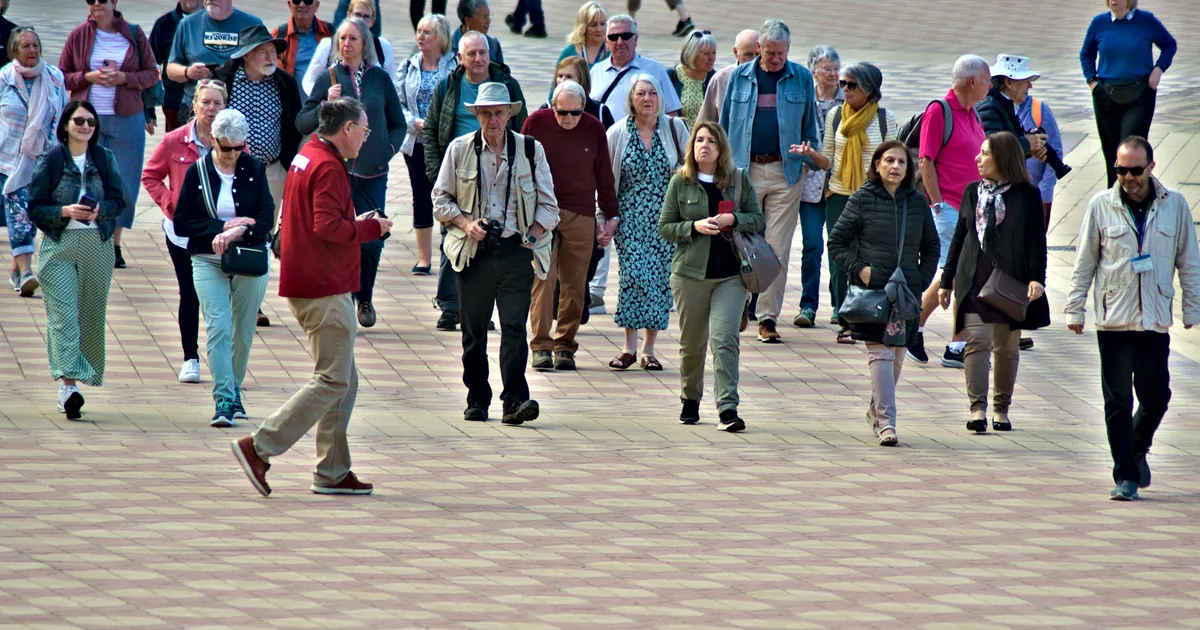
Not every queer walking tour in Berlin is the same. Here's an honest checklist for spotting a good LGBTQ+ tour — history, guides, locations, attitude and real local knowledge.
It takes more than rainbow flags
Berlin now offers many queer walking tours. Quality varies a lot. Some are well-thought-out, well-researched and personal — others rely on clichés, surface-level facts and guidebook phrasing. If you book a tour, you should know what marks quality. A rainbow flag in the logo is not a quality signal; it's a minimum standard.
Good tours connect history and present
A good queer tour doesn't reduce itself to a single period. It doesn't focus only on bars, only on Nazi persecution, only on party. It connects the Weimar Republic, the Nazi rupture, the post-war years, the AIDS crisis, the present-day community and the political situation in a narrative that stays followable — without slipping into list-mode. That connection is the actual work.
Why guides are decisive
On a walking tour, everything stands or falls with the guides. Anyone telling queer history should not just have researched it, they should have lived parts of it — through community experience or demonstrable depth in the field. A tour with drag queen guides combines both: stage experience, knowledge and personality. Other formats also work — but personality is not optional.
Why Schöneberg is an ideal location
If you're booking a queer tour, the location matters. Schöneberg, as the historical centre of queer life in Berlin, has a density other districts don't match. A tour through Schöneberg has more material from the start than one ticking off Mitte sights. Other districts have their place — but for queer city history, almost no path bypasses Nollendorfplatz.
What sets a drag queen tour apart
Drag queens as guides aren't a gimmick when done right. They combine stage personality, storytelling and community knowledge. A good drag queen tour isn't a drag show in walking format, it's a city tour with drag queen personality — knowledge plus pace plus punchline. Anyone underestimating the format should walk one.
Checklist for visitors
- Duration: 2.5 to 4 hours is realistic. Less than 2 hours is usually too short; more than 5 hours becomes tiring.
- Group size: smaller groups (10–25) allow conversation; very large groups feel like school classes.
- Language: German and English tours should be clearly indicated. Mixed-language tours rarely work well.
- Price: Very cheap tours often run on tip models and become content-variable. Fixed prices are more transparent.
- Content: A tour should explicitly state what it covers. Vagueness is a warning sign.
- Bookability: online booking with clear conditions and cancellation rules.
- Reviews: a few deep, specific reviews say more than 500 generic stars.
Live in the quarter, not just on Google
Our KiezTour connects exactly these points: real drag queen guides, the Nollendorfkiez, history, bars, and a tour that doesn't sound copy-pasted from a guidebook. To meet the people first, see the guide page; for practical questions, the FAQ page.
Frequently asked questions
How do I tell serious tours from superficial ones?
By depth and personality. Serious tours name sources, avoid clichés, leave space for questions, talk about the present as much as the past.
Are queer tours also suitable for allies?
Yes, explicitly. A good tour works for queer and non-queer audiences alike, without pandering to either.
Is a guided tour worth it if I already know a lot about Berlin?
Usually yes. Local knowledge, anecdotes and concrete addresses rarely come from reading; they come from conversation on location.
What distinguishes drag queen tours from classic LGBTQ tours?
Personality and pace. The substance can be equally strong; in form, drag queen tours tend to be more direct, sharper and less academic.