
Blog
How a residential district became Berlin's queer heart
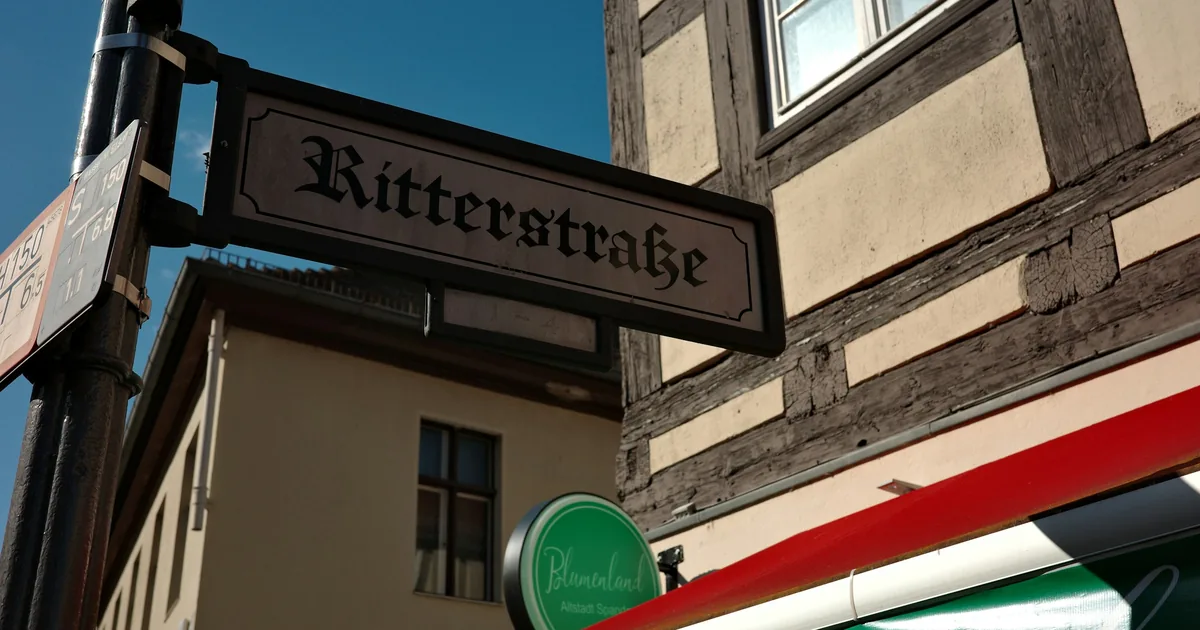
Berlin-Schöneberg has been a historical centre of queer life for over a century — from the Weimar Republic through the Nazi rupture to today's Rainbow Quarter. The full arc, in one read.
Schöneberg was never just a residential district
Walk through Schöneberg today and you see late 19th-century apartment blocks, cafés, kiosks and along the main streets the faded glamour of old West Berlin. What many overlook: the area has been one of Europe's historically densest queer spaces for over a hundred years. This history can be traced at concrete addresses — and it explains why this district, and not Mitte or Charlottenburg, became the Rainbow Quarter.
The Weimar Republic: freedom, nightlife, subculture
In the 1920s, Berlin was a major site of queer culture, science and the emancipation movement. Magnus Hirschfeld founded the Institut für Sexualwissenschaft in Tiergarten in 1919, combining medical advice, research, archive and meeting space — until it was destroyed in 1933. Schöneberg sat right next to it, geographically and socially. Bars, cabarets, associations and publishers clustered around Nollendorfplatz, Wittenbergplatz and parts of Tiergarten.
Weimar's queer scene was not a homogeneous glamour world. It ranged from avant-garde cabarets to middle-class associations to precarious working-class bars. That diversity made it strong — and at the same time vulnerable.
Bars, clubs and meeting spaces
Venues such as the Eldorado became famous well beyond Berlin. Alongside them, dozens of smaller and less spectacular meeting points existed for gay, lesbian and trans people. These spaces were not only about pleasure; they were social infrastructure — places of safety in a society that only partly tolerated queer life and continued to criminalise it through Paragraph 175.
The rupture under National Socialism
With the Nazi takeover in 1933, Weimar visibility ended abruptly. Bars were closed, associations dissolved, files seized. Hirschfeld's institute was looted and its library burned. Thousands of homosexual men were arrested under the tightened Paragraph 175, many deported to concentration camps. Lesbian women were less often formally prosecuted, but systematically isolated — they too lost their spaces.
For Schöneberg this was not a pause in queer life. It was the destruction of structures whose rebuilding would take decades.
Post-war and the long road back
After 1945, Paragraph 175 remained in force in West Germany in its tightened Nazi version for many years. It was substantially reformed only in 1969 and finally abolished in 1994. The revival of visible queer spaces in Schöneberg started slowly in the late 1960s and gained pace in the 1970s and 80s — driven by activism, new bars, bookshops and publications.
This phase shaped the quarter we know today: bookshops such as Eisenherz, bars around Motzstraße, community structures and eventually official adoption of the term Rainbow Quarter by the district itself.
Today: a Rainbow Quarter as lived memory
What characterises Schöneberg today is the overlap of history, scene and everyday life. You can step into a bar, see a memorial plaque a few metres from the door, walk three buildings further and stand in a bookshop that has been part of the community for decades — and end the evening in the same block where people danced in 1925. Few European neighbourhoods carry this density.
Live in the quarter, not just on Google
These layers are exactly what makes the KiezTour work: you don't walk through a museum, you walk through streets where queer history is still visible. Our drag queen guides connect anecdote, fact and present — without pathos, but with attitude.
Frequently asked questions
Why Schöneberg in particular?
The area was geographically central, had affordable apartments, a mixed middle- and lower-middle-class population and good transport. That allowed bars, associations and meeting points to concentrate, rather than spread across the city.
Was there queer life in Schöneberg before the 1920s?
Yes, but less visibly. Visibility expanded only with the Weimar Republic's relative liberalisation and the emerging emancipation movement.
What of the Weimar scene survived?
Architecturally, a lot — many addresses still exist, often with different uses. Substantively, very little: archives, collections and associations were systematically destroyed after 1933. Today's scene is a post-war reconstruction, not a continuous heritage.
Where can I learn more?
The Schwules Museum in Schöneberg collects and exhibits queer history. A guided tour complements the museum because it shows the places themselves.
Also worth a look on the KiezTour
- KiezTour dates — Thursdays through the Rainbow Quarter
- Locations with history
- Queer Berlin in the 1920s
- Magnus Hirschfeld in Berlin
Why this square matters for queer Berlin
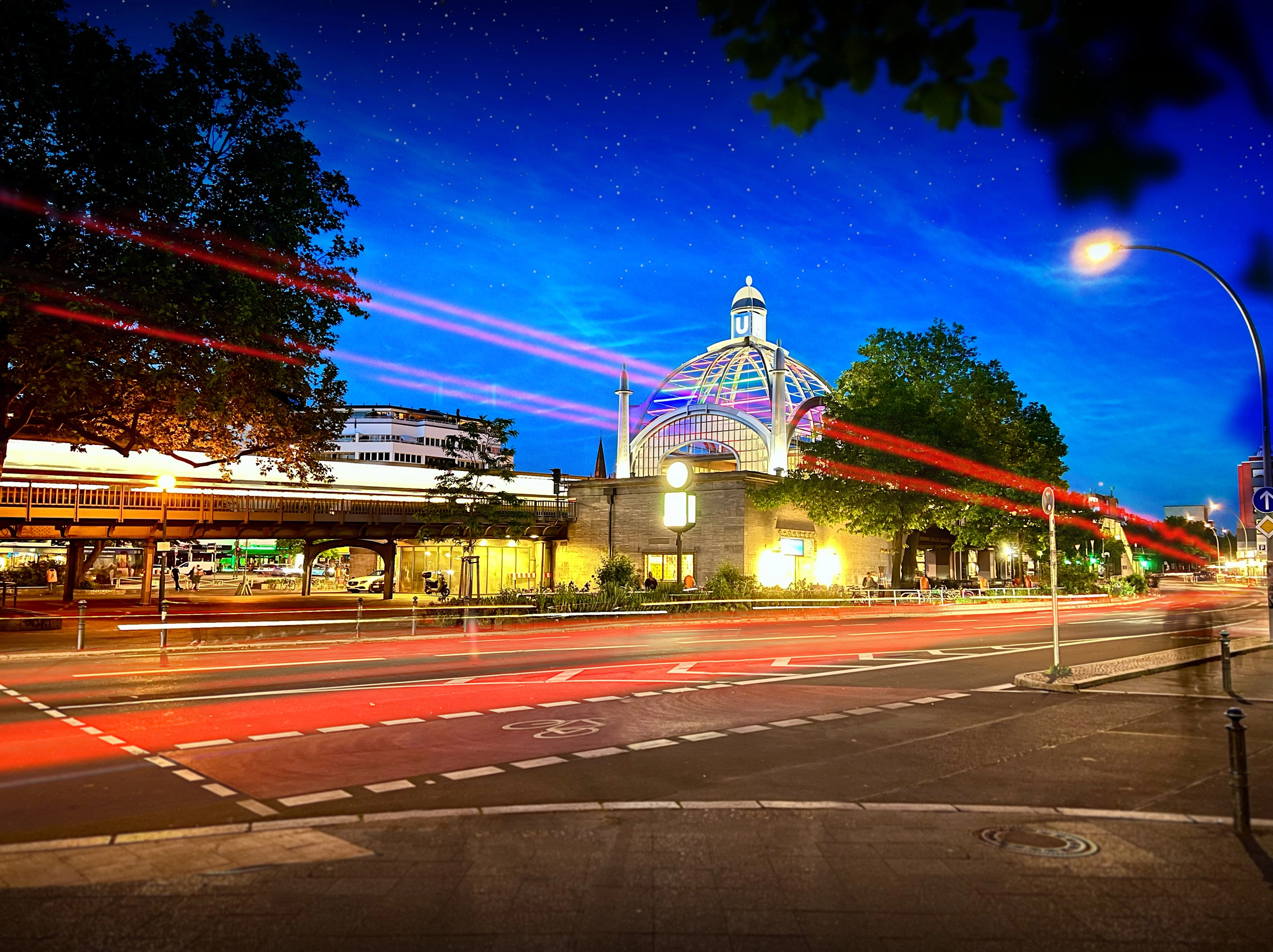
Nollendorfplatz is more than a U-Bahn station: it is considered the centre of Berlin's Rainbow Quarter — a place where queer visibility, the history of persecution and present-day nightlife meet within a few metres.
One square, many stories
At first glance Nollendorfplatz looks like an ordinary Berlin transport hub: an elevated U-Bahn station, bus stops, a market on Wednesdays and Saturdays, late 19th-century facades. Stand still for a few minutes and the layers start to show — rainbow flags above doorways, a memorial plaque at the station, bars whose entrances carry unmistakable queer codes.
This layering is exactly what makes the square central for many queer Berliners, visitors and historians. It works as meeting point, memorial and signpost — often within a few steps of each other.
Nollendorfplatz as the centre of the Rainbow Quarter
The Tempelhof-Schöneberg district explicitly describes Nollendorfplatz as the centre of the Rainbow Quarter. Around it lie the streets that historically form the heart of Berlin's gay scene: Motzstraße, Fuggerstraße, Eisenacher Straße and Nollendorfstraße.
This concentration is no coincidence. Already during the Weimar Republic, Schöneberg was one of the most important queer hubs in Europe — and Nollendorfplatz sat right in the middle. The fact that the district administration today routinely uses the term Rainbow Quarter is in part recognition of decades of grown visibility.
Queer life around the square
Today, around Nollendorfplatz you find a dense mix of bars, cafés, bookshops, fetish stores, restaurants and community institutions. Some addresses have been part of the local memory for decades; others come and go with the rhythm of the scene.
What stands out is how undemonstrative this visibility is. No one at Nollendorfplatz needs to convince anyone that queer life belongs here. That is exactly what many visitors notice immediately — and what makes the square such an unusually relaxed place.
The darker side of the history
A memorial plaque has hung at the U-Bahn station since 1989. With the pink triangle, it commemorates the persecution and murder of homosexual people during the Nazi regime. The pink triangle was the marker sewn onto the uniforms of homosexual prisoners in the camp system — a mark of disenfranchisement that the queer movement later reclaimed as a symbol of remembrance.
The plaque is small, easy to miss, and important precisely for that reason: it anchors a piece of history in the everyday space through which thousands of people pass each day. Stop for a moment, and the Rainbow Quarter looks different afterwards.
Why the place still matters today
Nollendorfplatz functions simultaneously as a safe space, a meeting point and a public landmark. For many queer people from rural areas, more conservative regions or abroad, it is the first place in Berlin where they can move without explaining themselves. For the city, it is an internationally known address — and therefore also a tourism factor.
This double role brings benefits and friction. It keeps the quarter visible and politically audible. It also turns bars into selfie backdrops if visitors forget that these are spaces with their own audiences.
What visitors often overlook
If you only cross the square, you mostly see the obvious markers: rainbow flags, bars, the occasional walking tour. It gets more interesting when you look closer — at doorways, small signs, notices in community spaces, the memorial at the station, mosaic details on some facades.
The square does not tell its story loudly. It expects you to take your time.
Live in the quarter, not just on Google
At Nollendorfplatz, history doesn't stay abstract. On our KiezTour we stand exactly where queer visibility, persecution and present-day nightlife meet within a few metres. Our drag queen guides tell these stories on location — sharp, charming and free of guidebook clichés.
Frequently asked questions about Nollendorfplatz
Why is Nollendorfplatz considered a queer place?
The square sits at the heart of historically queer Schöneberg. Already during the Weimar Republic, the area was a centre of Berlin's gay scene — a tradition that continues today in bars, associations, bookshops and memorial sites.
What is the memorial plaque at the U-Bahn station?
Installed in 1989, the plaque uses the pink triangle to commemorate homosexual victims of the Nazi regime. It is one of the first memorials of its kind in Berlin's public space.
Which U-Bahn lines stop at Nollendorfplatz?
U1, U2, U3 and U4. This four-line constellation is unusual for a single Berlin neighbourhood and one reason such a dense scene could develop here in particular.
Can I visit the square without any prior knowledge?
Of course — but you'll see far more if you understand the context. A guided tour or a few background articles turn this transport hub into a walkable history book.
Also worth a look on the KiezTour
- Upcoming KiezTour dates — Thursdays through the Nollendorfkiez
- Locations around Nollendorfplatz
- What makes the Rainbow Quarter unique
Why drag is more than a show
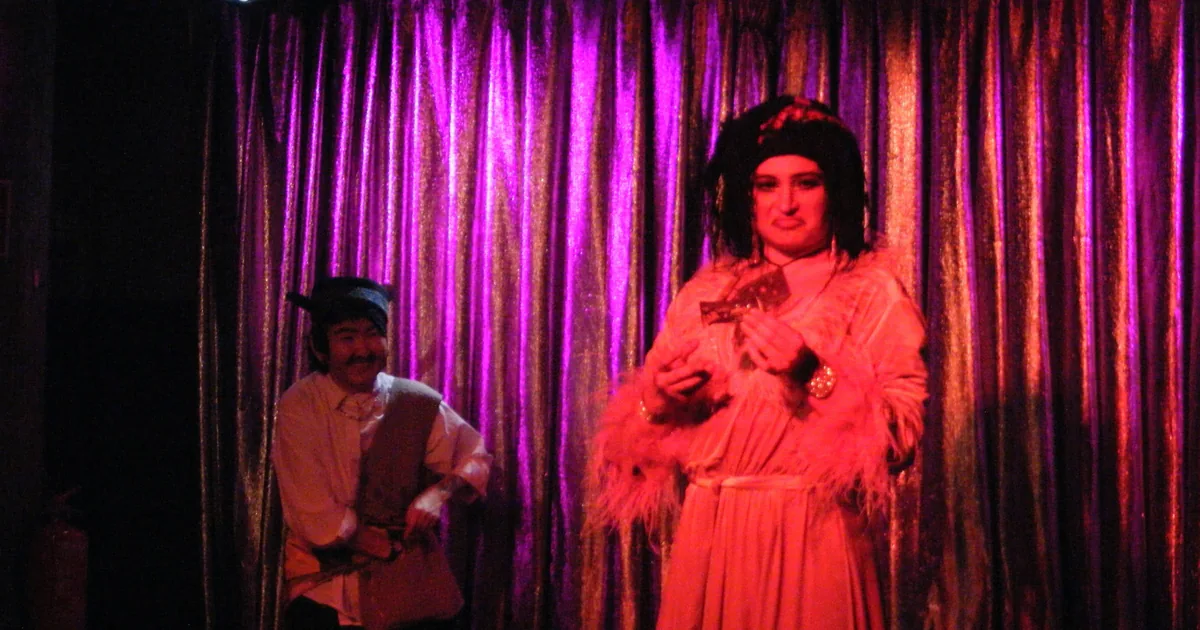
Drag queens belong to Berlin like nightlife and attitude. In the Rainbow Quarter they are performers, storytellers and a political statement at the same time.
Drag is entertainment — but not only
At first glance drag works as a show: costume, make-up, attitude, voice, timing. If you've ever seen a good drag performance you understand why the format entertains. But describing drag purely as comedy or spectacle misses half the picture: drag is also commentary — on the gender order, on class, on who is allowed on a stage.
Drag as social commentary
Drag plays with gender roles by exaggerating them. A drag queen is not primarily an imitation; she is a commentary figure. The tradition reaches far back: Weimar cabaret stages in the 1920s, New York ballroom culture in the 1970s and 80s, AIDS-crisis activism, mainstreaming via RuPaul's Drag Race from the 2010s onwards. In each phase, the point was more than just dressing up.
Berlin sits in this line with its own history: Weimar-era cabarets used gender exaggeration as an art form long before it was called drag in the US.
Berlin as a stage for drag
Today Berlin hosts one of Europe's densest drag scenes. Bars in the Rainbow Quarter, Kreuzberg, Neukölln and Friedrichshain put on regular shows. The scene is plural: comedy drag, performance-art drag, lipsync shows, drag kings, alternative drag beyond classic glamour codes. There is no single Berlin drag style — there is a field.
Drag in the Nollendorfkiez
In the Rainbow Quarter, drag has been part of the everyday for decades. Some bars run regular drag nights, others work with guest performers, others are explicitly performer-run venues. Tour guides from the drag scene act as a bridge between entertainment and knowledge transfer — a combination that doesn't exist this densely everywhere.
Why a drag queen tour works differently
A guided walk with drag queen guides is not a drag show in the strict sense. It's a format that combines personality, knowledge, anecdote and performance. The history of the quarter isn't read from a script, it's told — with pace, punchlines and the occasional gut punch. If you expect guidebook tone, you'll get something else.
This format suits the Nollendorfkiez especially well, because past and present don't separate cleanly here anyway.
What visitors can expect
Not pure comedy. Not dry history. Instead: storytelling fed by personal experience with Berlin's scene and queer history, delivered with the speed and directness that come from stage work. If you don't laugh at least once, you probably caught the wrong evening — not the wrong guide.
Live in the quarter, not just on Google
On our KiezTour, actual drag queens lead through the quarter. That doesn't make the history less serious — it often makes it accessible in the first place. The guide profiles are on the guide page.
Frequently asked questions about drag in Berlin
Where can I see drag shows in Berlin?
The Rainbow Quarter has classic drag bars; Kreuzberg, Neukölln and Friedrichshain offer more alternative drag performances. Most venues announce dates via social media.
Is drag the same as crossdressing?
No. Crossdressing is a broader practice; drag is a performative art form rooted in stage context. The two overlap but are not identical.
Are drag shows only for queer audiences?
No, drag shows in Berlin are generally open. The point is not to treat the audience as pure consumers, but as part of a space with codes.
What's the difference between a drag queen tour and a drag show?
A tour is a guided city walk led by drag queens — the focus is on stories and places, not on an evening-length stage show.
Also worth a look on the KiezTour
How to plan a queer Berlin evening
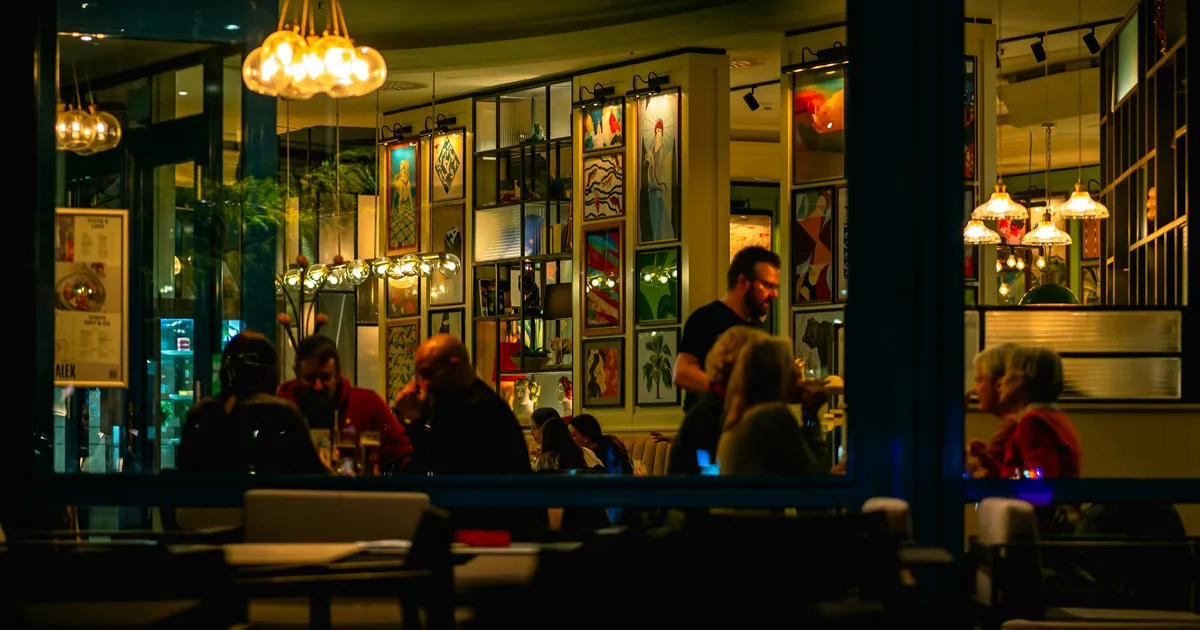
You have one evening in Berlin and want to actually understand the Rainbow Quarter, not just walk through it? Here's a mini-route with tour, locations and a few tips that aren't from every guidebook.
Berlin's queer heart at a glance
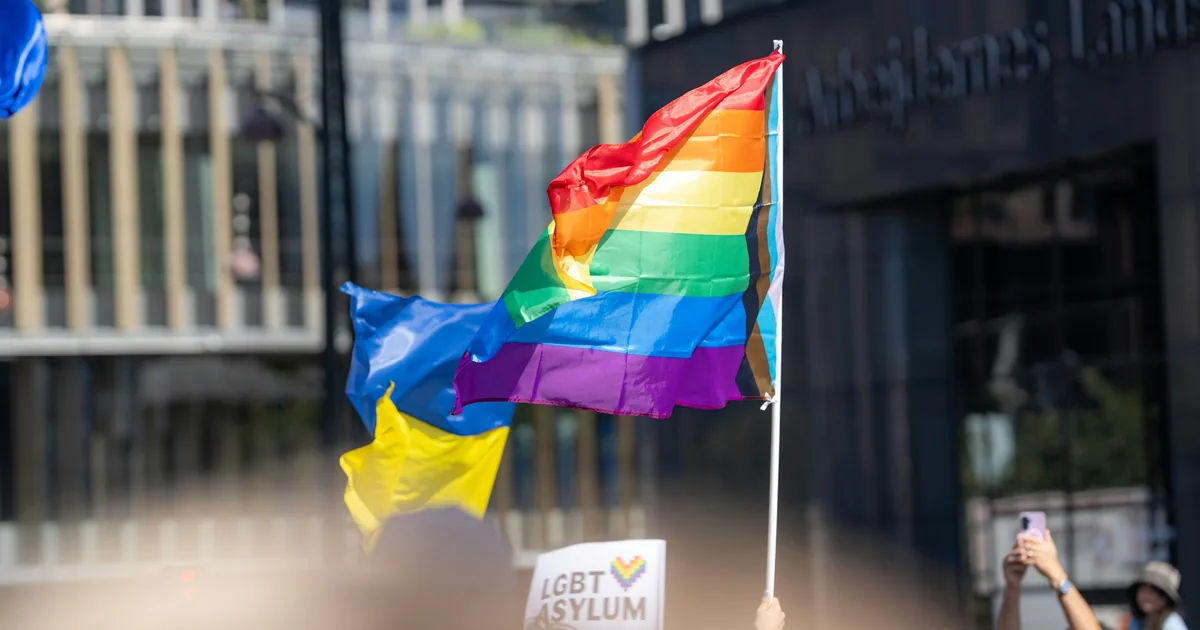
The Rainbow Quarter around Nollendorfplatz is the geographic and symbolic heart of queer Berlin. What defines the neighbourhood, why it's known internationally, and what you can experience there today — at a glance.
Where exactly is the Rainbow Quarter?
The Rainbow Quarter covers the streets around Nollendorfplatz: Motzstraße, Fuggerstraße, Eisenacher Straße and Nollendorfstraße form the historical core together with the square itself. The Tempelhof-Schöneberg district officially describes Nollendorfplatz as the centre of the Rainbow Quarter, with the surrounding streets as the historical heart of Berlin's gay scene.
The quarter is directly accessible via four U-Bahn lines (U1, U2, U3 and U4) — a constellation that is unusual for a single Berlin neighbourhood and has contributed substantially to its international visibility.
Why is it called the Rainbow Quarter?
The name refers to the rainbow flag, the internationally established symbol of queer visibility that emerged in San Francisco in the 1970s and has since stood for the diversity of gender and sexual identities. In Schöneberg's quarter you find the symbol not only on individual bars, but on street signs, building facades, shop windows — and even on the kerb.
The name is not a marketing invention. It grew out of a real, visible queer infrastructure over decades, and was eventually adopted by the district administration itself.
From subculture to a visible neighbourhood
Schöneberg was already one of the most important queer hubs in Europe during the Weimar Republic. Bars, associations, publishing houses and the nearby Institut für Sexualwissenschaft, founded by Magnus Hirschfeld in 1919, made the area a place where queer life had to be hidden less than in most other places.
This visibility ended brutally with the Nazi takeover — persecution, deportation and murder destroyed the existing structures almost entirely. It was only from the late 1970s and 80s onwards that bars, initiatives and communities slowly rebuilt the quarter into what it is today: a neighbourhood where queer life is not just present, but matter-of-factly visible.
What you see in the Rainbow Quarter today
If you walk through the quarter without any background, you first see a mix of residential streets, bars, cafés, bookshops, fetish stores and restaurants. Look more carefully and you start to see layers:
- The memorial plaque at U-Bahn station Nollendorfplatz, installed in 1989, commemorating with a pink triangle the persecution and murder of homosexual people during the Nazi era.
- Bars, bookshops such as Eisenherz, and meeting places that have been part of community history for decades.
- Rainbow markings on the pavement, on street signs and facades — not city marketing, but a self-positioning that has grown over time.
- A mix of long-time regulars and visitors that turns the quarter into an unusually open space.
You can find a curated selection of the venues we visit on our tours under Locations.
Why the quarter is more than going out
Reducing the Rainbow Quarter to a place to drink or party would miss the point. It is at the same time a site of memory — the history of persecution, activism and emancipation is not abstract here, it is readable at concrete addresses. It is a space of safety — many queer people come here precisely because they can be visible without having to explain themselves. And it is a space of observation — anyone who wants to understand how queer life in Western Europe has changed over the past hundred years finds in the Nollendorfkiez a dense piece of history concentrated on a few square kilometres.
Live in the quarter, not just on Google
Many places in the Rainbow Quarter look at first glance like ordinary bars, street corners or apartment buildings. On our KiezTour, we show you why they matter for the history of queer Berlin — exactly where they happened. Our drag queen guides connect history, anecdote and present-day quarter culture in a four-hour walk that starts every Thursday at 5:30 pm; English-language tours run on the first Thursday of every month.
Frequently asked questions about the Rainbow Quarter
Where does the Rainbow Quarter begin?
The quarter is not strictly defined. At its core it surrounds Nollendorfplatz with Motz, Fugger, Eisenacher and Nollendorfstraße. From the U-Bahn station you can reach the most important addresses on foot in a few minutes.
Is the Rainbow Quarter open to everyone?
Yes. The quarter is explicitly an open neighbourhood — queer bars generally welcome allies and visitors, but individual venues cater to specific communities.
When is the best time to visit?
The quarter is interesting all year round. It is particularly lively around Pride events in summer, the Lesbian and Gay Street Festival in July and Folsom Europe in September.
How can I experience the Rainbow Quarter on a guided tour?
On our KiezTour, drag queens lead a four-hour walk through the Nollendorfkiez every Thursday at 5:30 pm. English-language tours are scheduled on the first Thursday of each month and cost €39 per person.
If you don't just want to read about the quarter but actually walk through it, you'll find the next dates on our tours page and a selection of the places we visit on our locations overview.